

Case Study
·
#05
The Design Platform
One source of truth. Multiple consumption layers.
ROLE -
Staff Product Designer
TEAMS -
Design · Engineering · Marketing · Product
FOCUS -
Design systems · Design platforms · AI-ready design knowledge · Systems thinking
01 — REFRAME
From Design System to Design Platform
Creating a shared design foundation for exploration, design and production.

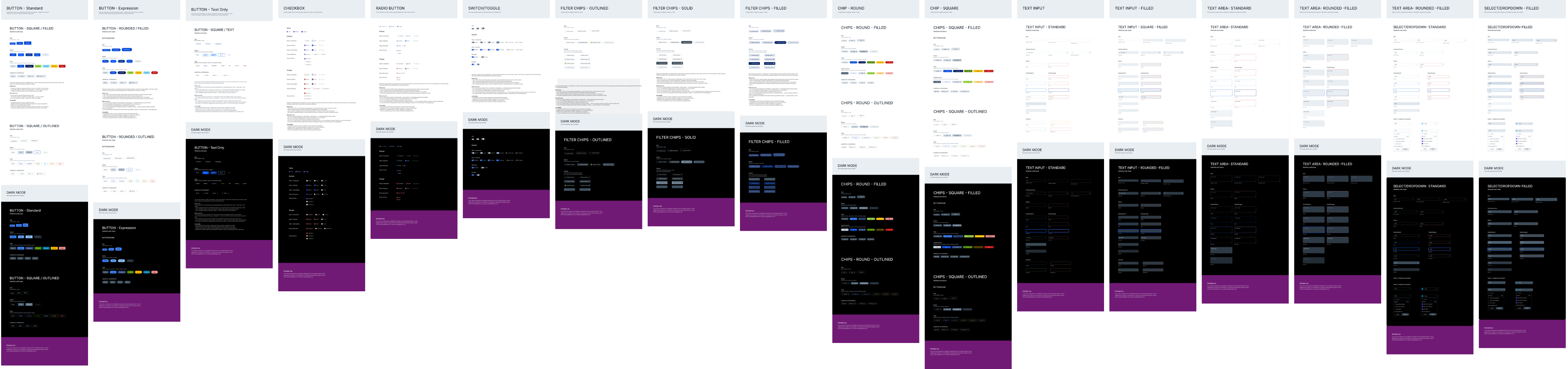
As Beeline explored AI-assisted product development, it became clear that design knowledge needed to work beyond traditional design tools.
I challenged the idea that the design system should exist primarily as a resource for designers. Instead, I proposed a Design Platform: a structured source of design knowledge that could support different teams, tools and stages of product development.
One Design Platform. Multiple consumption layers.
02 — DEFINE
Making design knowledge machine-readable
Accessible to people, tools and AI.
A traditional design system wasn't enough to support emerging AI-assisted workflows and increasingly collaborative product development.
AI tools need more than visual assets. They need structured, machine-readable context: Markdown for principles and guidance, JSON for design tokens, and version-controlled documentation that can be accessed and used in different workflows.
Figma remained essential for design work, but it couldn't, on its own, provide the structured and portable foundation these workflows needed.
I saw an opportunity to make design knowledge usable wherever it was needed — not just where it was created.
The challenge wasn't simply sharing design assets. It was making design knowledge usable.
AI-ready design
"Beyond the design system"
Making design knowledge work across people, tools and AI.
03 — ARCHITECT
One source of truth
Creating a shared foundation for people, products and AI.
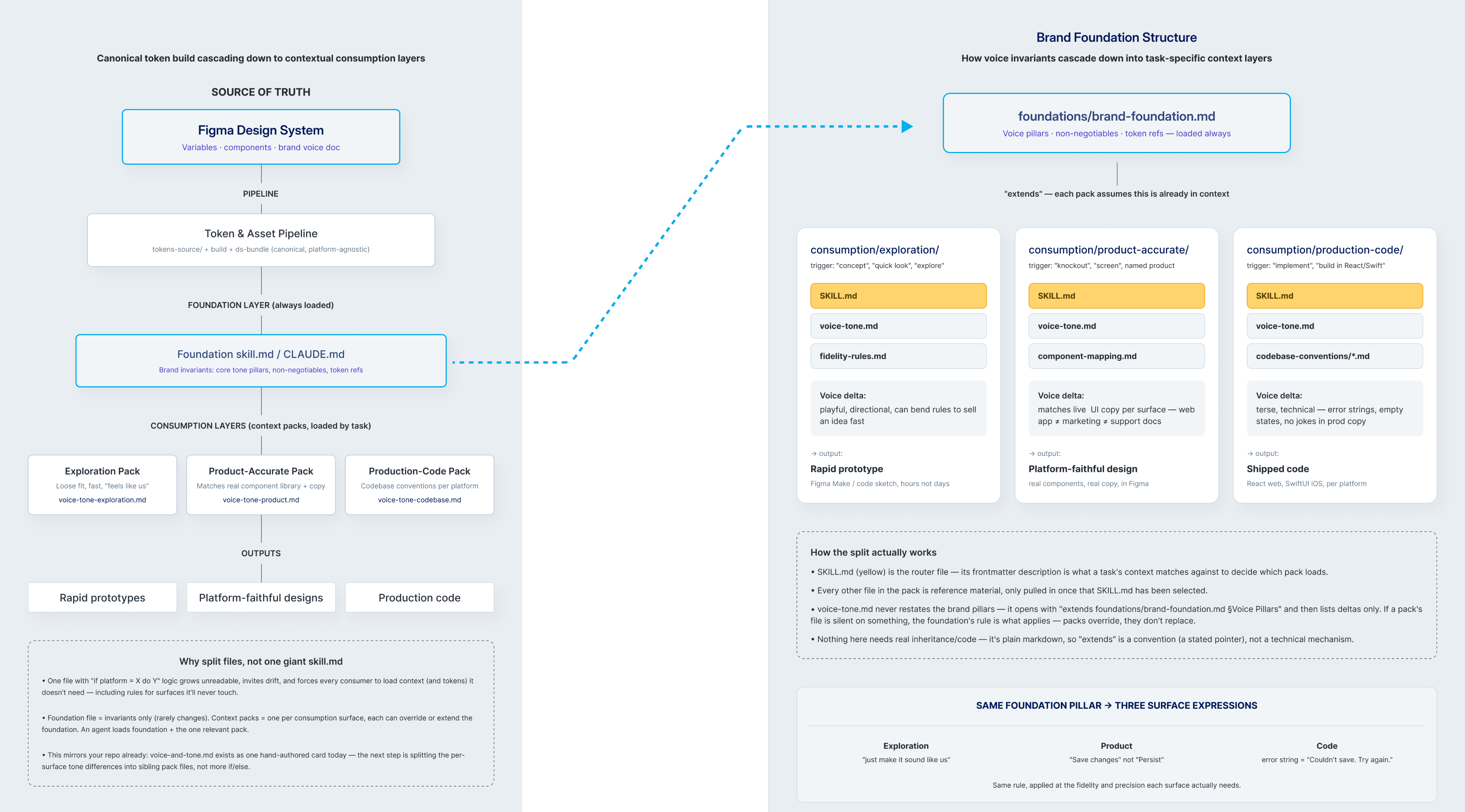
I proposed the Design Platform, researched the technical approach and worked with Engineering to validate GitHub as a shared, version-controlled source of design knowledge.
I also built the supporting Figma design system, structuring foundations, components and guidance so designers could continue working in their familiar environment.
The architecture separated the source of design knowledge from the tools consuming it. Markdown captured principles and product context; JSON made design tokens machine-readable; version control provided traceability and governance.
Accessibility was built into the foundations, with a ‘Designed for accessibility’ approach that made it part of the starting point rather than something addressed later.
The platform brought together:
- Foundations — design tokens, typography, colour and accessibility.
- Components and patterns — reusable UI and interaction guidance.
- Reference and context — brand guidance, product examples and design principles.
One structured foundation, maintained centrally and available to different consumers.
STRATEGIC INFLUENCE
"Building the case for change"
Connecting design-system thinking with a more scalable, AI-ready platform architecture.
04 — MODEL
Different needs, different consumption layers
One platform supporting three stages of product development.
Explore →
Rapid Prototypes in Claude Design
Product Managers use a curated version of the platform to explore ideas quickly, with access to relevant design context and foundations. Prototypes can capture intent in a Living Brief.
deliberately flexible, lower fidelity.
Design →
Product design in Figma
Designers take promising concepts and Living Briefs into Figma, refining them into accessible, product-specific experiences using the shared foundations and components.
controlled, product-specific refinement.
Build →
Production-ready implementation
Engineering uses structured tokens, documentation and product-specific guidance to translate designs into feasible, production-ready interfaces.
implementation using structured foundations.
One foundation. Different levels of fidelity
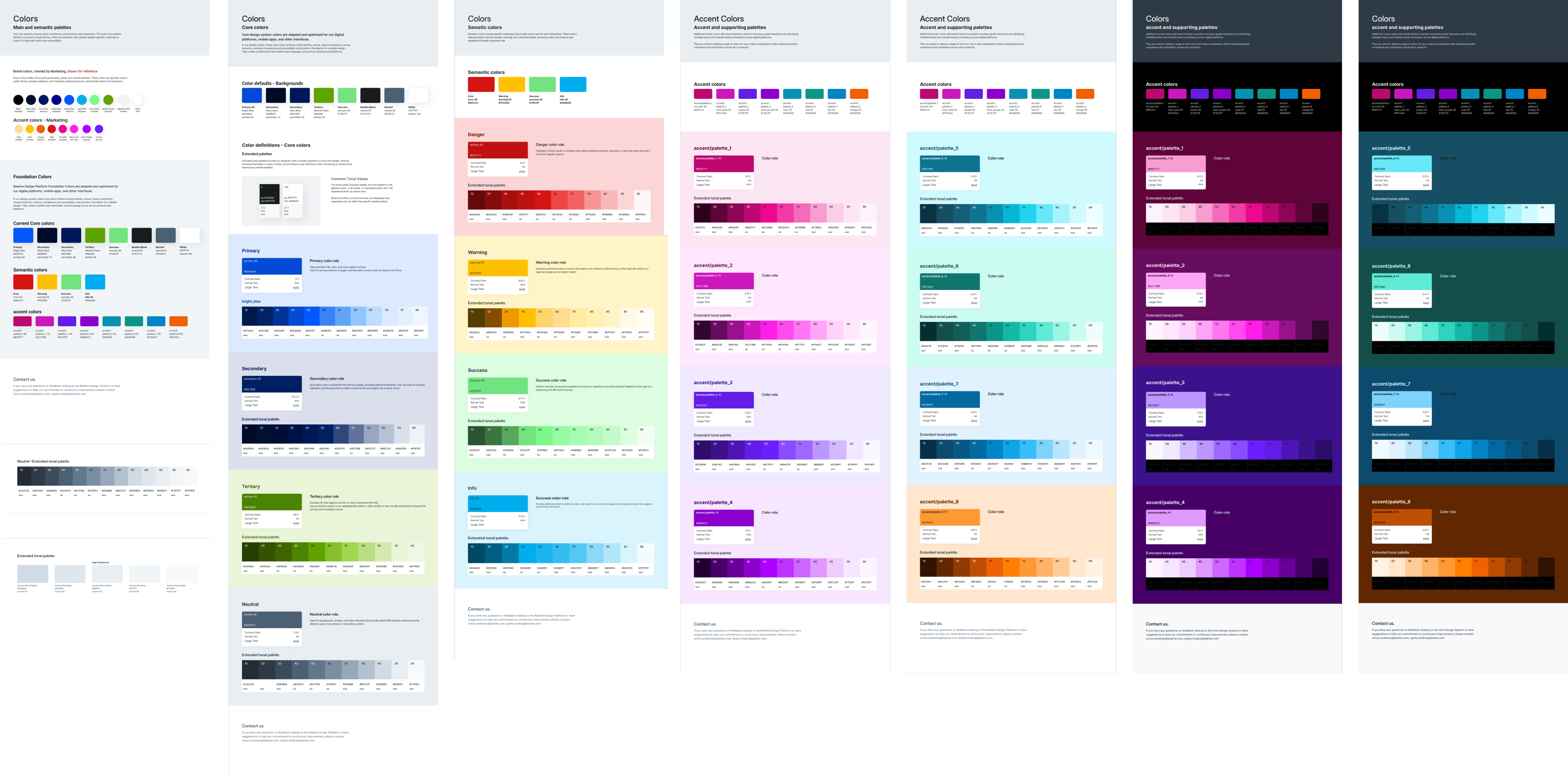
Exploring beyond the established colour foundations.
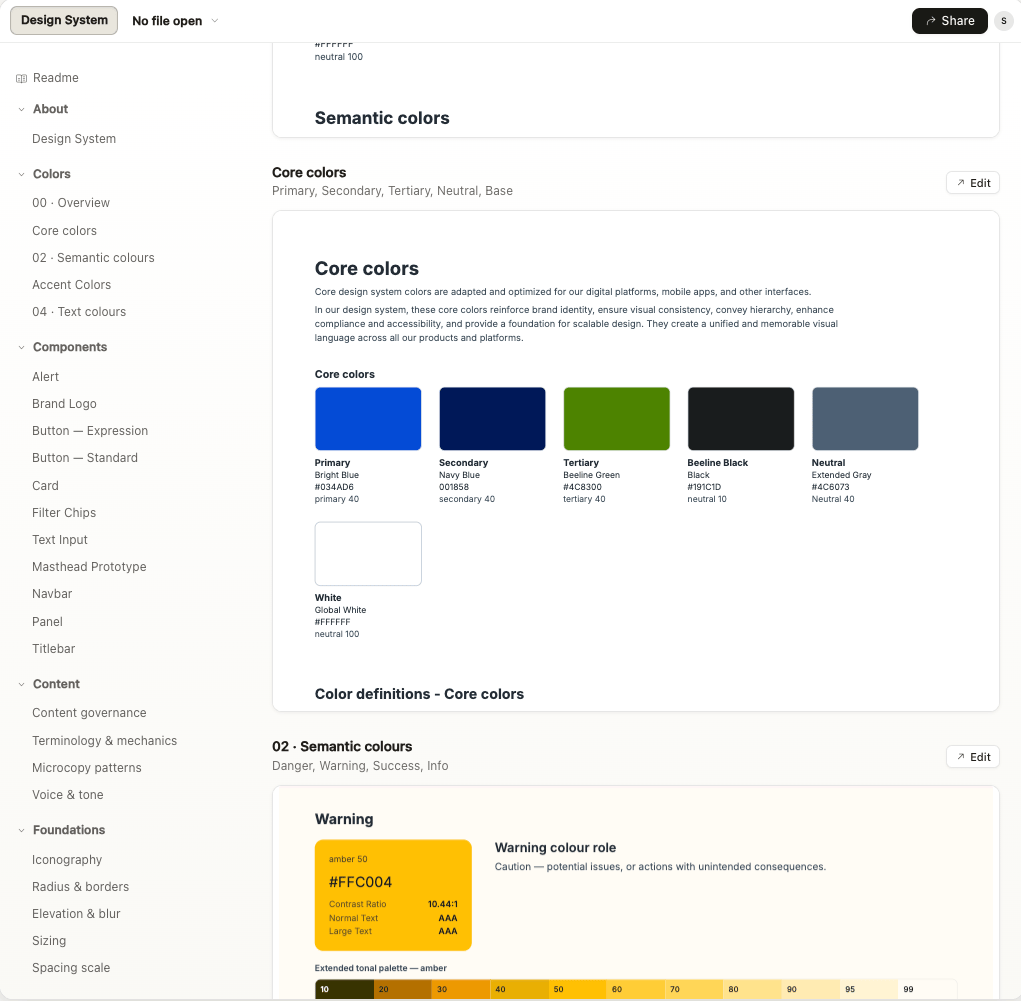
How the platform's design context informed AI-generated prototypes.
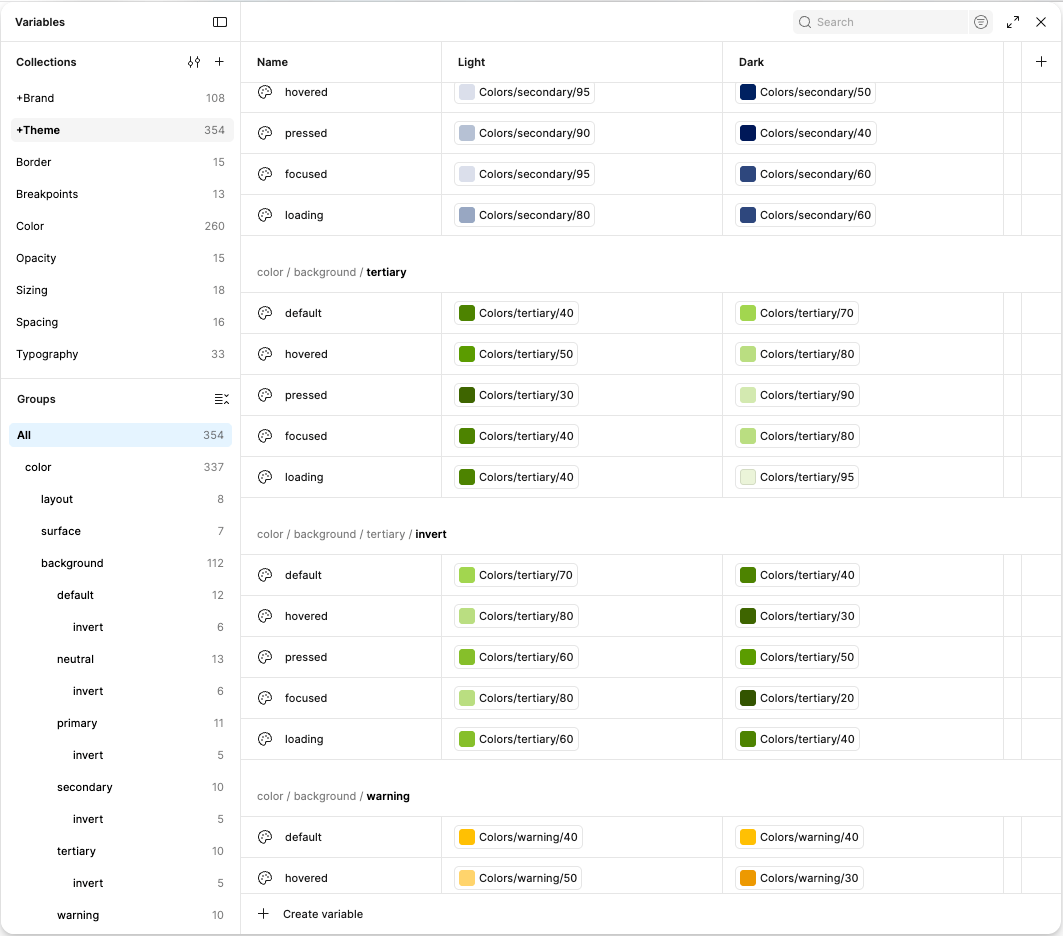
Tokens and variables from the Figma design system
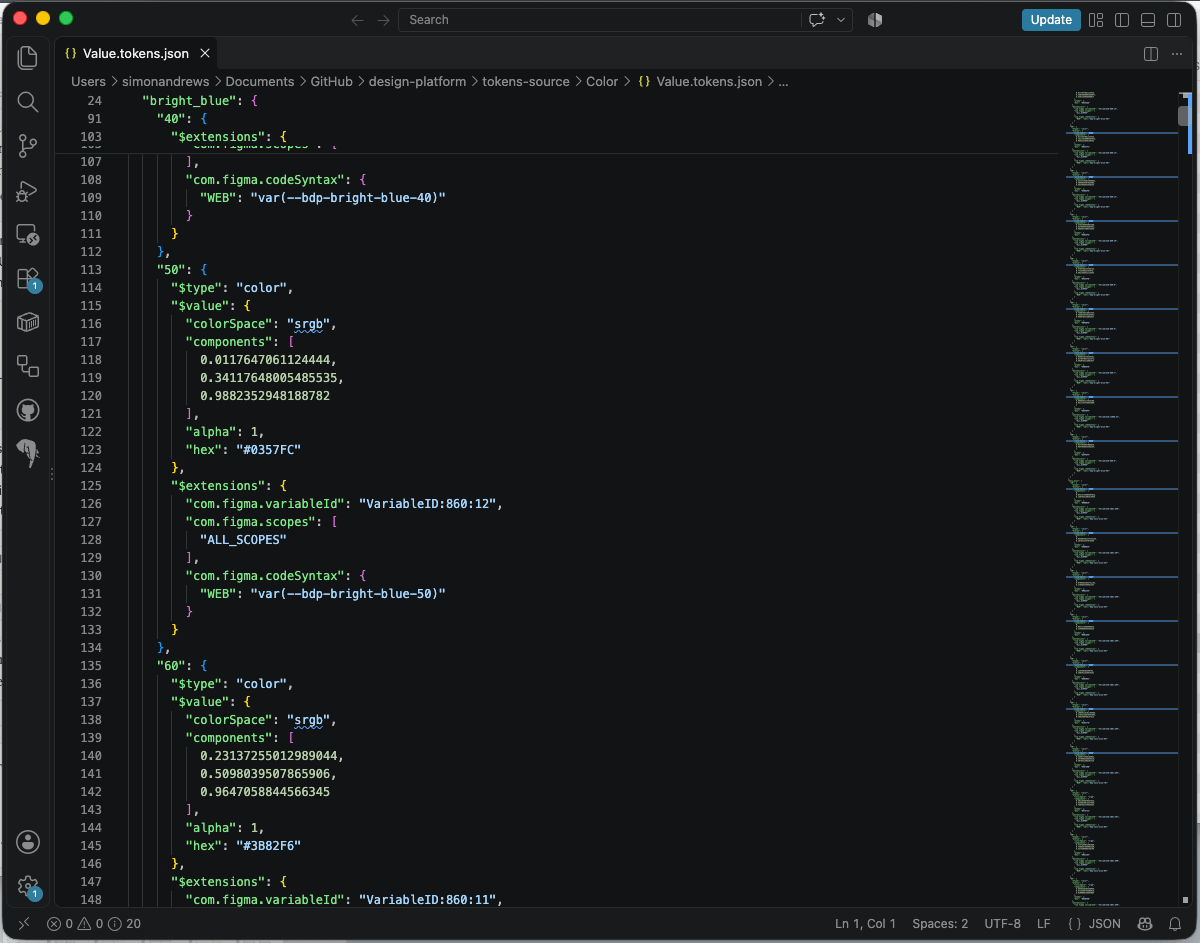
Markdown guidance and structured files maintained in the repository.
05 — EXPLORE
Designed for exploration, not production
Consistent by default. Flexible enough to explore.
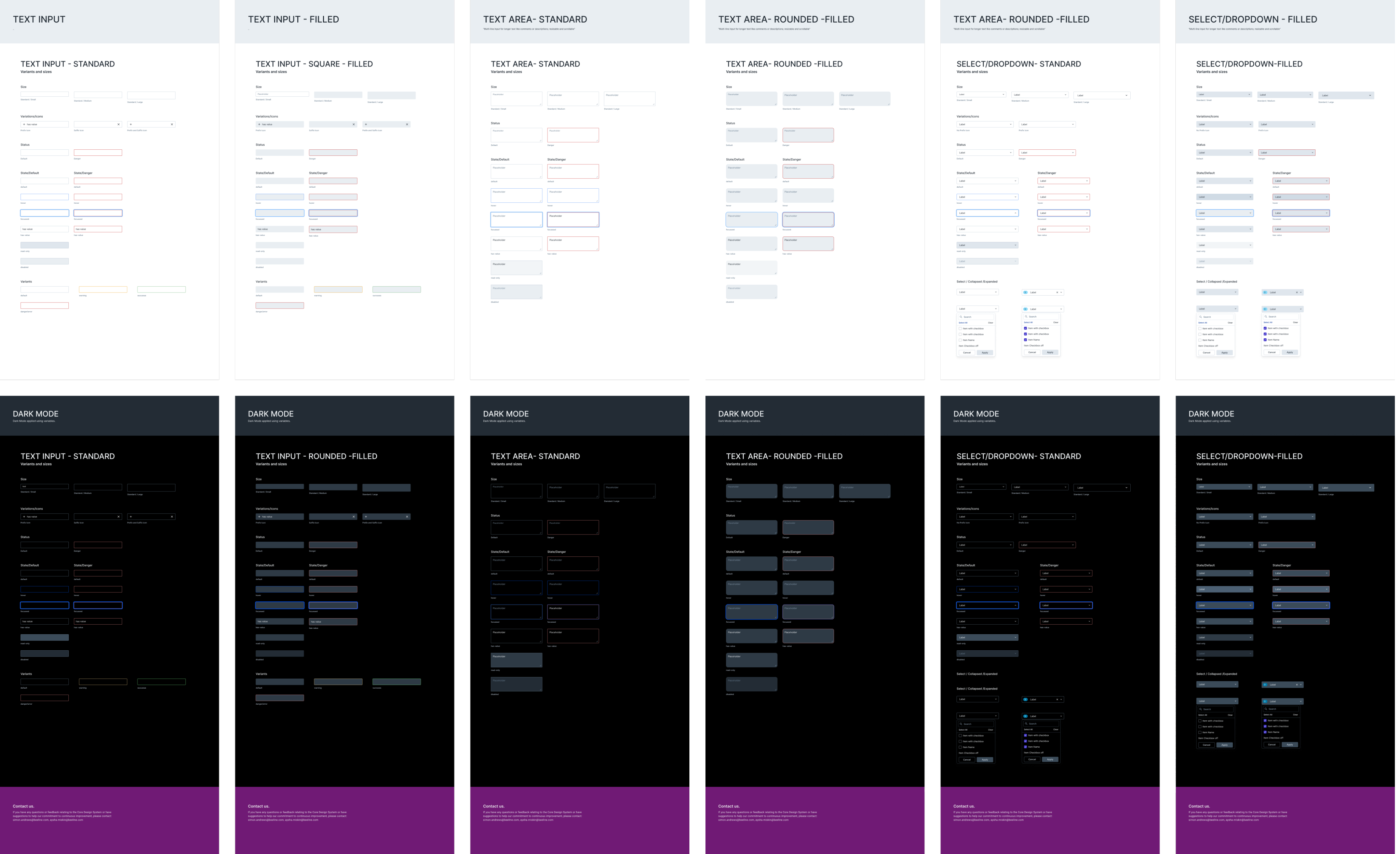
I designed the Claude Design setup with guardrails around Beeline's core design foundations, helping prototypes feel part of the same product family, even when created by different Product Managers.
The guidance deliberately allowed more flexibility beyond established components and patterns. This gave PMs room to explore new layouts, interactions and ideas without being constrained by the existing design system.
The prototypes weren't intended to be finished designs. They were a way to explore possibilities, with promising concepts moving into Design and Engineering for refinement, validation and production.
Consistent foundations. Freedom to explore.
DESIGN JUDGEMENT
"Guardrails without limiting exploration"
Providing enough structure for consistency, without constraining what teams could discover.
06 — INFLUENCE
Organisa tional impact
Making design knowledge easier to maintain, share and use.
A shared source of truth
Design knowledge maintained centrally and available across different tools and workflows.
Less friction across legacy platforms
A common foundation that supports improvements without requiring every product to migrate to the same implementation.
Accessibility by design
Accessible foundations provide a stronger starting point for new and evolving interfaces.
More consistent products
Shared tokens, components and guidance help maintain a recognisable product family.
Readiness for AI-enabled workflows
Structured design knowledge can be consumed by AI tools as well as people.
Better cross-team alignment
Product, Design and Engineering can work from shared foundations, with clearer guidance as concepts move towards production.
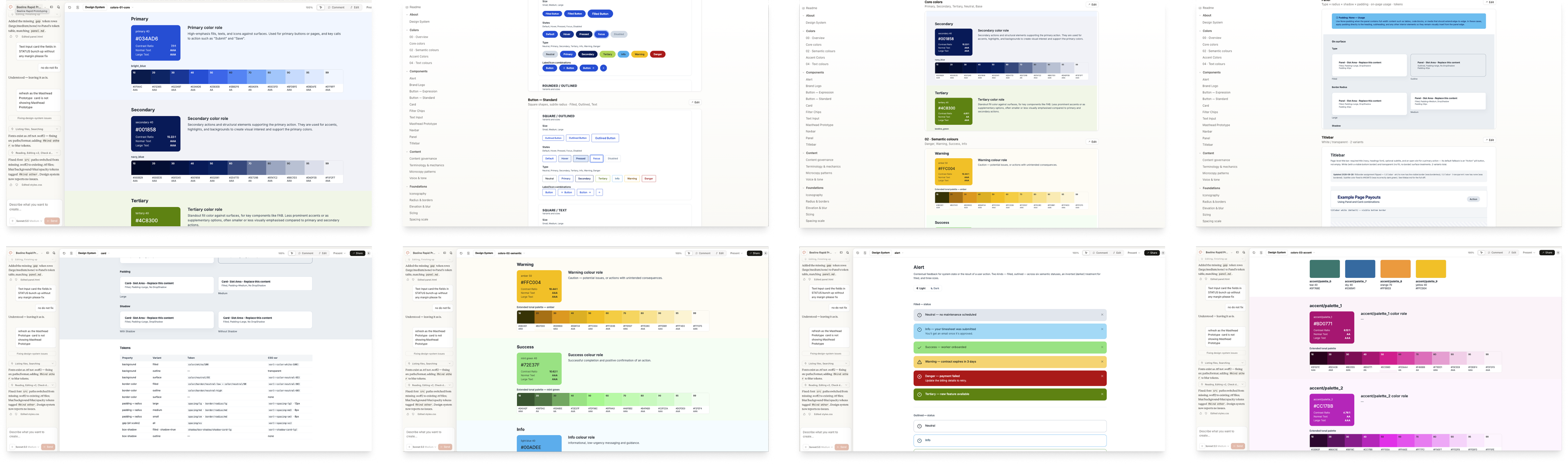
Design-system fidelity managed in the Claude Design consumption layer.
08 — IMPACT
The outcome
Turning strategy into something teams could use
3x
More ideas explored
Increased the number of concepts explored in parallel through rapid prototyping.
832
Design tokens
1,362 values across themes, brands and responsive modes.
6
Products
One shared token foundation available to all brand variation.
75%
Filtered before validation
Concepts screened before entering Design and Engineering validation.
1
Structured source of truth
Versioned in GitHub, independent of any single tool. Markdown, JSON, tokens, and governance in one place
2+
Consumption layers
Rapid exploration and platform-accurate design output.
The proposal was adopted, with teams beginning to adapt workflows around new design engagement models and a clearer route into production.
08 — Reflect
My role and influence
Reframing the design system as a platform

I proposed the platform architecture, researched the technical approach and worked with Engineering to validate GitHub as a structured, version-controlled source of design knowledge.
I also built the supporting Figma design system and developed the approach for making that knowledge accessible to different consumers.
Challenged the existing model
Identified the limitations of treating Figma as the sole source of design knowledge.
Defined the platform architecture
Proposed a shared foundation with structured documentation, machine-readable tokens and versioned governance.
Connected design and technology
Worked with Engineering to validate the technical approach and establish how the platform could support different tools and workflows.
Made it usable in practice

Built the supporting Figma system and designed the Claude Design consumption layer, balancing consistency with creative exploration.


Home
Work
About
Contact
Case Study
·
#05
The Design Platform
One source of truth. Multiple consumption layers.
ROLE -
Staff Product Designer
TEAMS -
Design · Engineering · Marketing · Product
FOCUS -
Design systems · Design platforms · AI-ready design knowledge · Systems thinking
01 — REFRAME
From Design System to Design Platform
Creating a shared design foundation for exploration, design and production.

As Beeline explored AI-assisted product development, it became clear that design knowledge needed to work beyond traditional design tools.
I challenged the idea that the design system should exist primarily as a resource for designers. Instead, I proposed a Design Platform: a structured source of design knowledge that could support different teams, tools and stages of product development.
One Design Platform. Multiple consumption layers.
02 — DEFINE
Making design knowledge machine-readable
Accessible to people, tools and AI.
A traditional design system wasn't enough to support emerging AI-assisted workflows and increasingly collaborative product development.
AI tools need more than visual assets. They need structured, machine-readable context: Markdown for principles and guidance, JSON for design tokens, and version-controlled documentation that can be accessed and used in different workflows.
Figma remained essential for design work, but it couldn't, on its own, provide the structured and portable foundation these workflows needed.
I saw an opportunity to make design knowledge usable wherever it was needed — not just where it was created.
The challenge wasn't simply sharing design assets. It was making design knowledge usable.
AI-ready design
"Beyond the design system"
Making design knowledge work across people, tools and AI.
03 — ARCHITECT
One source of truth
Creating a shared foundation for people, products and AI.
I proposed the Design Platform, researched the technical approach and worked with Engineering to validate GitHub as a shared, version-controlled source of design knowledge.
I also built the supporting Figma design system, structuring foundations, components and guidance so designers could continue working in their familiar environment.
The architecture separated the source of design knowledge from the tools consuming it. Markdown captured principles and product context; JSON made design tokens machine-readable; version control provided traceability and governance.
Accessibility was built into the foundations, with a ‘Designed for accessibility’ approach that made it part of the starting point rather than something addressed later.
The platform brought together:
- Foundations — design tokens, typography, colour and accessibility.
- Components and patterns — reusable UI and interaction guidance.
- Reference and context — brand guidance, product examples and design principles.
One structured foundation, maintained centrally and available to different consumers.
STRATEGIC INFLUENCE
"Building the case for change"
Connecting design-system thinking with a more scalable, AI-ready platform architecture.
04 — MODEL
Different needs, different consumption layers
One platform supporting three stages of product development.
Explore →
Rapid Prototypes in Claude Design
Product Managers use a curated version of the platform to explore ideas quickly, with access to relevant design context and foundations. Prototypes can capture intent in a Living Brief.
deliberately flexible, lower fidelity.
Design →
Product design in Figma
Designers take promising concepts and Living Briefs into Figma, refining them into accessible, product-specific experiences using the shared foundations and components.
controlled, product-specific refinement.
Build →
Production-ready implementation
Engineering uses structured tokens, documentation and product-specific guidance to translate designs into feasible, production-ready interfaces.
implementation using structured foundations.
One foundation. Different levels of fidelity
Exploring beyond the established colour foundations.
How the platform's design context informed AI-generated prototypes.
Tokens and variables from the Figma design system
Markdown guidance and structured files maintained in the repository.
05 — EXPLORE
Designed for exploration, not production
Consistent by default. Flexible enough to explore.
I designed the Claude Design setup with guardrails around Beeline's core design foundations, helping prototypes feel part of the same product family, even when created by different Product Managers.
The guidance deliberately allowed more flexibility beyond established components and patterns. This gave PMs room to explore new layouts, interactions and ideas without being constrained by the existing design system.
The prototypes weren't intended to be finished designs. They were a way to explore possibilities, with promising concepts moving into Design and Engineering for refinement, validation and production.
Consistent foundations. Freedom to explore.
DESIGN JUDGEMENT
"Guardrails without limiting exploration"
Providing enough structure for consistency, without constraining what teams could discover.
06 — INFLUENCE
Organisa tional impact
Making design knowledge easier to maintain, share and use.
A shared source of truth
Design knowledge maintained centrally and available across different tools and workflows.
Less friction across legacy platforms
A common foundation that supports improvements without requiring every product to migrate to the same implementation.
Accessibility by design
Accessible foundations provide a stronger starting point for new and evolving interfaces.
More consistent products
Shared tokens, components and guidance help maintain a recognisable product family.
Readiness for AI-enabled workflows
Structured design knowledge can be consumed by AI tools as well as people.
Better cross-team alignment
Product, Design and Engineering can work from shared foundations, with clearer guidance as concepts move towards production.
Design-system fidelity managed in the Claude Design consumption layer.
08 — IMPACT
The outcome
Turning strategy into something teams could use
3x
More ideas explored
Increased the number of concepts explored in parallel through rapid prototyping.
832
Design tokens
1,362 values across themes, brands and responsive modes.
6
Products
One shared token foundation available to all brand variation.
75%
Filtered before validation
Concepts screened before entering Design and Engineering validation.
1
Structured source of truth
Versioned in GitHub, independent of any single tool. Markdown, JSON, tokens, and governance in one place
2+
Consumption layers
Rapid exploration and platform-accurate design output.
The proposal was adopted, with teams beginning to adapt workflows around new design engagement models and a clearer route into production.
08 — Reflect
My role and influence
Reframing the design system as a platform

I proposed the platform architecture, researched the technical approach and worked with Engineering to validate GitHub as a structured, version-controlled source of design knowledge.
I also built the supporting Figma design system and developed the approach for making that knowledge accessible to different consumers.
Challenged the existing model
Identified the limitations of treating Figma as the sole source of design knowledge.
Defined the platform architecture
Proposed a shared foundation with structured documentation, machine-readable tokens and versioned governance.
Connected design and technology
Worked with Engineering to validate the technical approach and establish how the platform could support different tools and workflows.
Made it usable in practice

Built the supporting Figma system and designed the Claude Design consumption layer, balancing consistency with creative exploration.