

Case Study
·
#04
Evolving Design Models
Reimagining how and where Design works best
ROLE -
Staff Product Designer
TEAMS -
Product · Engineering · Implementation · Strategy
FOCUS -
Design strategy · Operating models · Cross-functional collaboration · AI-enabled workflows
01 — DEFINE
Context
The organisation was changing. Design needed to change with it.

Product development was becoming more collaborative and AI-enabled, creating opportunities for Design to influence more than the interfaces being delivered.
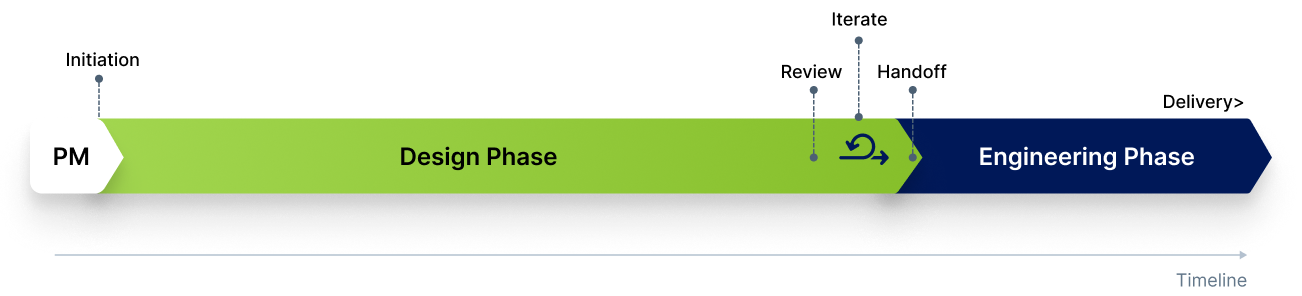
The challenge with the traditional modelSequential workflows and handoffs created bottlenecks, misalignment and distance between Design decisions and Engineering expertise. Design was often involved too late to shape problems or influence feasibility.
The opportunity
Move towards a more collaborative model, where Design helps teams align, explore solutions and scale quality throughout the product lifecycle.
02 — REFRAME
Strategic intervention
Reframing how Design creates value
I challenged the assumption that Design needed to remain a discrete delivery stage.
I developed a framework for a more flexible model that could:
- Involve Design earlier when uncertainty was high.
- Enable Product-led exploration.
- Bring Engineering closer to discovery.
- Scale quality through shared standards.
- Adapt to AI-enabled ways of working.
I validated the direction with Engineering, developed the models and created the narrative and visual framework to communicate the proposed change.
My role was to connect these separate ideas into a coherent model for how Design could create greater value across the organisation.
03 — RETHINK
The strategic shift
From production function to enabling capability
The shift wasn't less Design. It was more deliberate Design.
Previous model
Design enters after the brief
Design produces specifications
Engineering receives a handoff
Design is project-based
Design Systems support designers
Quality relies on review
Evolving model
Design helps shape requirements and explore solutions
Design translates intent into buildable experiences
Product, Design and Engineering collaborate throughout
Design engages where it can have the greatest impact
Design Platforms support people, tools and workflows
Quality is enabled through shared foundations
STRATEGIC INFLUENCE
"Changing where Design creates value"
Moving beyond delivery to shape decisions earlier, enable collaboration and extend Design's impact across the product lifecycle.
04 — DEVELOP
The new models
Applying Design where it has the most impact
I introduced three models, matching the level of Design involvement to the uncertainty, complexity and ownership of each challenge.
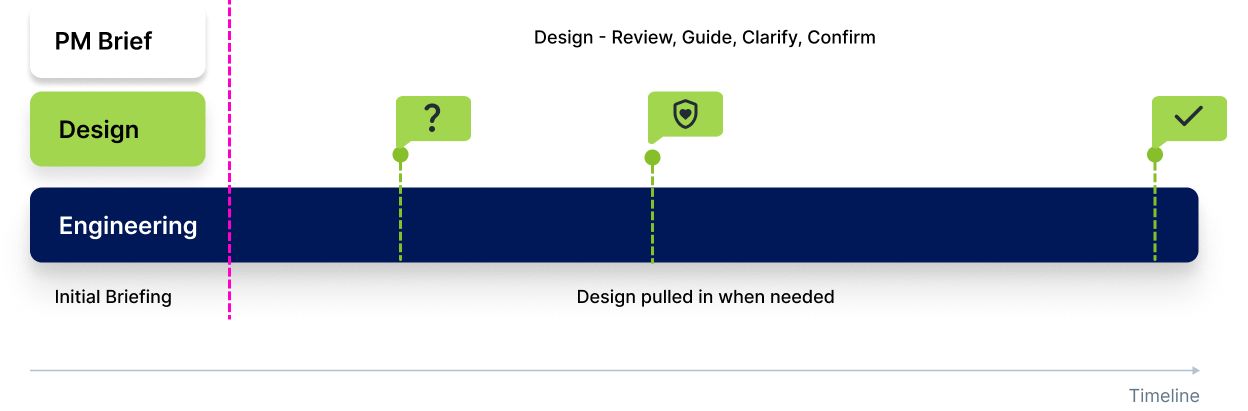
Embedded Design Advisory
For improving existing experiences.Guide → Review → Validate
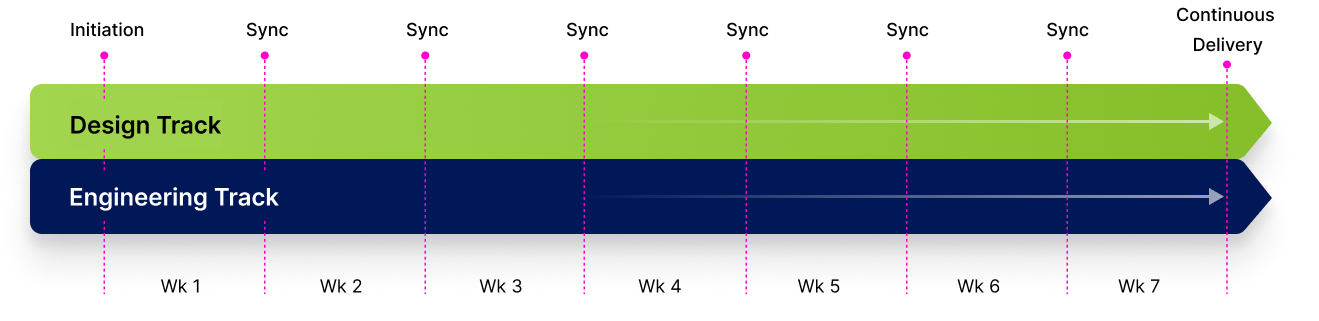
Dual-Track Delivery
For complex initiatives requiring close collaboration.Explore → Shape → Build
Shift-Left Design
For new or uncertain opportunities.Explore → Validate → Translate
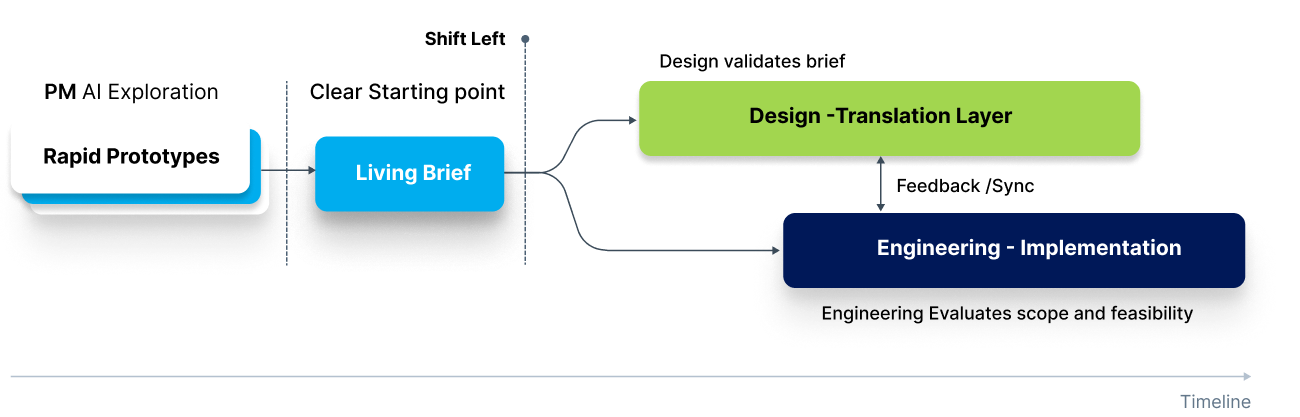
These weren't intended as rigid processes. They gave teams a practical way to choose the right level of Design involvement for the work.
05 — MAP
One adaptable Design approach
Three models. Different design needs.
The models work together as one adaptable system, matching Design involvement to the needs of each challenge.
Model - Embedded Design Advisory
Situation - Improve an existing experience
Design's role - Guide, review, and validate against shared standards
Model - Dual-Track Delivery
Situation - Discover and deliver a complex initiative.
Design's role - Explore and shape solutions alongside Engineering.
Model - Shift-Left Design
Situation - Explore a new or uncertain opportunity.
Design's role -Turn prioritised ideas and Living Briefs into validated, buildable experiences.
06 — MEASURE
Making the models work in practice
Mapping how new ways of working connect with existing workflows.
I created flow diagrams to show Product, Design, Engineering and Delivery Managers how the proposed models could work in practice.
The flows mapped:
- Roles and responsibilities — who does what, and when.
- Collaboration points — where teams work together and validate decisions.
- Routes into delivery — how explorations and prototypes move into Engineering workflows, with a Living Brief capturing intent and context.
From initial idea to production, the diagrams made the proposed ways of working tangible.
End to end flow - ideation to delivery

End to end flow - ideation to delivery
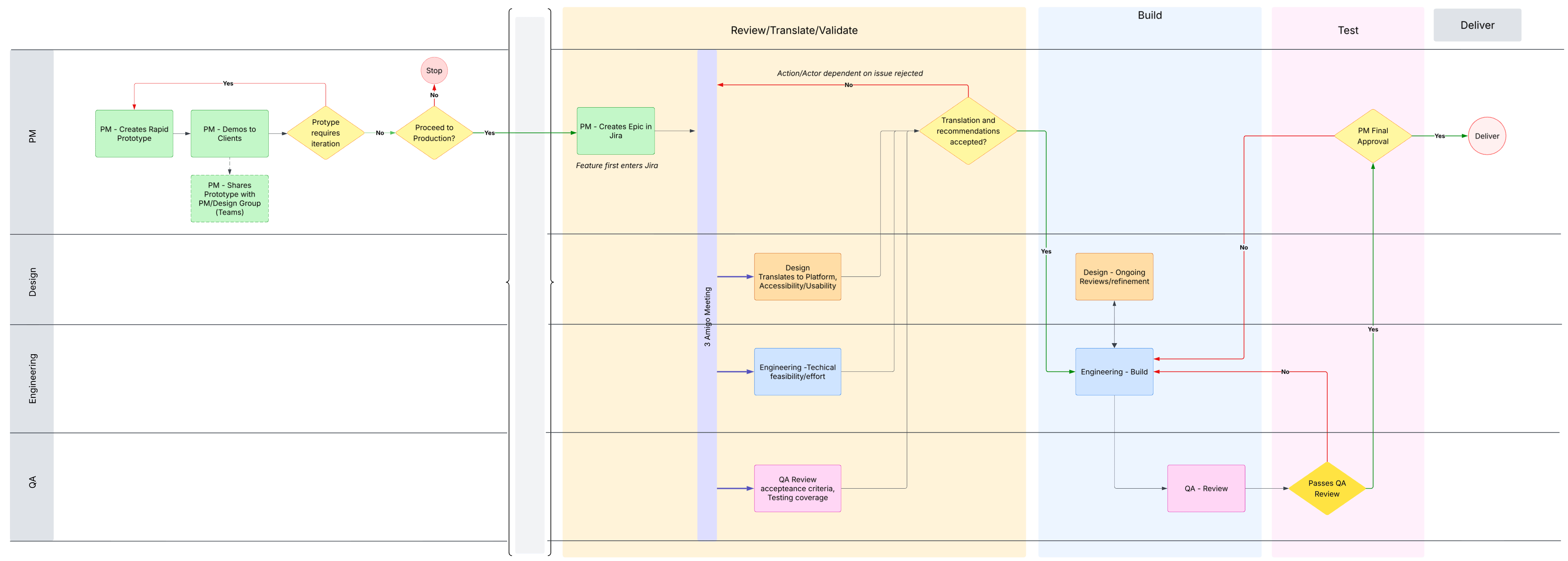
Swimlanes show the roles involved at each stage and how work moves between them.
Discovery and ‘Needs Design’ triage
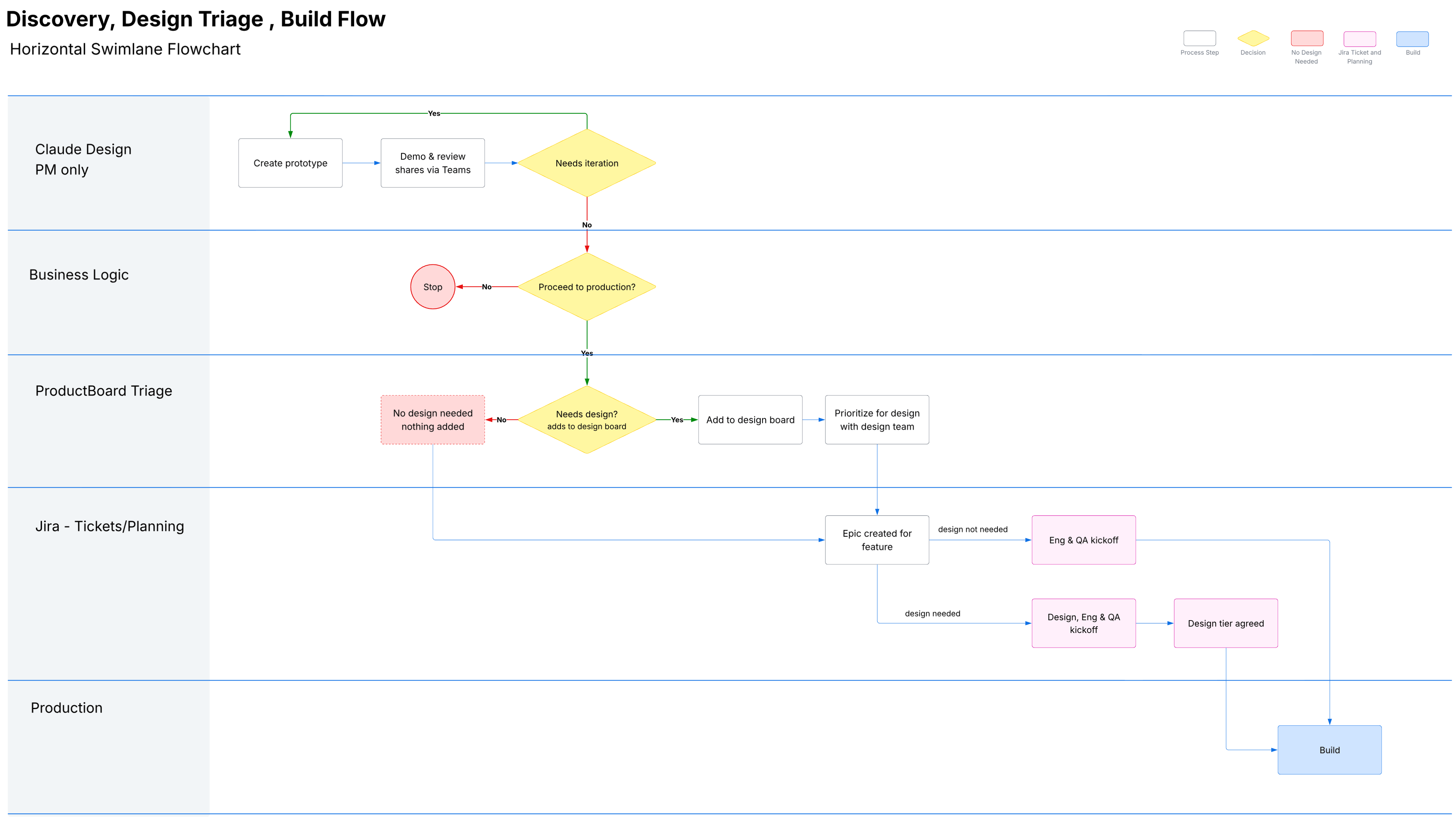
Showing how new work enters the Design process and is directed towards the appropriate model.
Rapid Prototype → Living Brief → Production Pipeline → Delivery
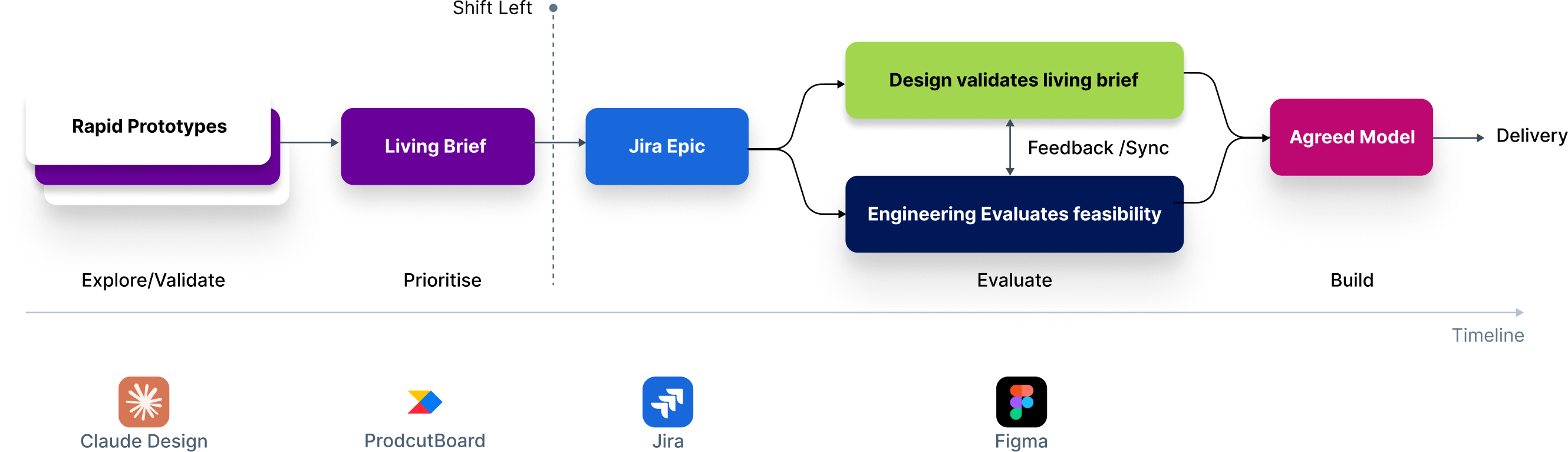
Showing how early exploration can translate into a clear brief for Engineering, without losing the thinking behind the prototype.
SYSTEMS THINKING
"Designing for a different way of working"
The future of Design isn't less Design. It's using people, tools and AI to create more value.
7 — ENABLE
The outcome
Turning strategy into something teams could use
Pilot observations
Days → Hours
Faster prototyping
Early pilots showed a reduction in the time needed to explore ideas, from days to hours.
2×
More ideas explored
Pilot teams explored up to three times as many concepts in parallel.
75%
Filtered early
Around 75% of concepts were screened out before entering the production pipeline.
2×
Project reach
The pilot demonstrated the potential for designers to engage with twice as many projects.
These early observations helped demonstrate the potential of the new models. The wider team accepted the proposal and began adapting workflows around new Design engagement models and a clearer route from exploration into production.
08 — IMPACT
Organisational impact
Positioning Design as a driver of organisational change
Organisational adoption
The wider team accepted the approach and began adapting workflows to support the new Design engagement models.
Earlier collaboration
Clearer roles and collaboration points brought Product, Design and Engineering closer together.
A more adaptable Design capability
Different models gave teams flexibility to involve Design in ways that matched the needs of each challenge.
The shift
Design became a capability the wider organisation could draw on, rather than a service delivered at a single stage of the process.
SYSTEMS THINKING
"Positioning Design as a driver of organisational change."
Shaping how teams work, decisions are made, and product quality scales.
09 — REFLECT
My role and influence
Turning a strategic idea into an actionable framework
I proposed and developed a strategic framework for evolving how Design worked in a more collaborative, AI-enabled environment.
My contribution connected the operating models with the tools, shared foundations and governance needed to make the approach practical.
Challenged the status quo
Identified how the traditional sequential model limited collaboration and Design's influence.
Created a shared direction
Established a common understanding of how Design could contribute at different stages and in different ways.
Made new ways of working tangible
Defined three engagement models and mapped how they could work within existing workflows..
Connected the bigger picture
Linked the models to Design Platform thinking, AI-enabled workflows and the foundations needed to scale them.
Rethinking the role of Design
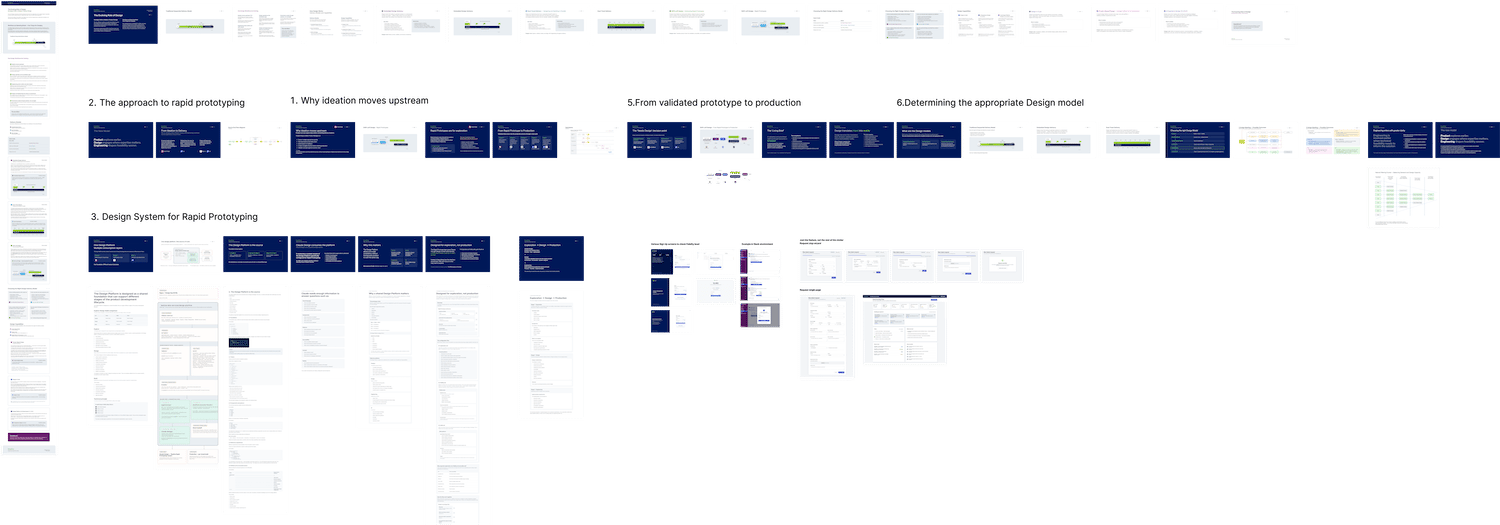
Figma presentation used to communicate the proposal for evolving Design beyond delivery, enabling earlier collaboration, better decisions and greater impact across the product lifecycle.


Home
Work
About
Contact
Case Study
·
#04
Evolving Design Models
Reimagining how and where Design works best
ROLE -
Staff Product Designer
TEAMS -
Product · Engineering · Implementation · Strategy
FOCUS -
Design strategy · Operating models · Cross-functional collaboration · AI-enabled workflows
01 — DEFINE
Context
The organisation was changing. Design needed to change with it.

Product development was becoming more collaborative and AI-enabled, creating opportunities for Design to influence more than the interfaces being delivered.
The challenge with the traditional modelSequential workflows and handoffs created bottlenecks, misalignment and distance between Design decisions and Engineering expertise. Design was often involved too late to shape problems or influence feasibility.
The opportunity
Move towards a more collaborative model, where Design helps teams align, explore solutions and scale quality throughout the product lifecycle.
02 — REFRAME
Strategic intervention
Reframing how Design creates value
I challenged the assumption that Design needed to remain a discrete delivery stage.
I developed a framework for a more flexible model that could:
- Involve Design earlier when uncertainty was high.
- Enable Product-led exploration.
- Bring Engineering closer to discovery.
- Scale quality through shared standards.
- Adapt to AI-enabled ways of working.
I validated the direction with Engineering, developed the models and created the narrative and visual framework to communicate the proposed change.
My role was to connect these separate ideas into a coherent model for how Design could create greater value across the organisation.
03 — RETHINK
The strategic shift
From production function to enabling capability
The shift wasn't less Design. It was more deliberate Design.
Previous model
Design enters after the brief
Design produces specifications
Engineering receives a handoff
Design is project-based
Design Systems support designers
Quality relies on review
Evolving model
Design helps shape requirements and explore solutions
Design translates intent into buildable experiences
Product, Design and Engineering collaborate throughout
Design engages where it can have the greatest impact
Design Platforms support people, tools and workflows
Quality is enabled through shared foundations
STRATEGIC INFLUENCE
"Changing where Design creates value"
Moving beyond delivery to shape decisions earlier, enable collaboration and extend Design's impact across the product lifecycle.
04 — DEVELOP
The new models
Applying Design where it has the most impact
I introduced three models, matching the level of Design involvement to the uncertainty, complexity and ownership of each challenge.
Embedded Design Advisory
For improving existing experiences.Guide → Review → Validate
Dual-Track Delivery
For complex initiatives requiring close collaboration.Explore → Shape → Build
Shift-Left Design
For new or uncertain opportunities.Explore → Validate → Translate
These weren't intended as rigid processes. They gave teams a practical way to choose the right level of Design involvement for the work.
05 — MAP
One adaptable Design approach
Three models. Different design needs.
The models work together as one adaptable system, matching Design involvement to the needs of each challenge.
Model - Embedded Design Advisory
Situation - Improve an existing experience
Design's role - Guide, review, and validate against shared standards
Model - Dual-Track Delivery
Situation - Discover and deliver a complex initiative.
Design's role - Explore and shape solutions alongside Engineering.
Model - Shift-Left Design
Situation - Explore a new or uncertain opportunity.
Design's role -Turn prioritised ideas and Living Briefs into validated, buildable experiences.
06 — MEASURE
Making the models work in practice
Mapping how new ways of working connect with existing workflows.
I created flow diagrams to show Product, Design, Engineering and Delivery Managers how the proposed models could work in practice.
The flows mapped:
- Roles and responsibilities — who does what, and when.
- Collaboration points — where teams work together and validate decisions.
- Routes into delivery — how explorations and prototypes move into Engineering workflows, with a Living Brief capturing intent and context.
From initial idea to production, the diagrams made the proposed ways of working tangible.
End to end flow - ideation to delivery
End to end flow - ideation to delivery
Swimlanes show the roles involved at each stage and how work moves between them.
Discovery and ‘Needs Design’ triage
Showing how new work enters the Design process and is directed towards the appropriate model.
Rapid Prototype → Living Brief → Production Pipeline → Delivery
Showing how early exploration can translate into a clear brief for Engineering, without losing the thinking behind the prototype.
SYSTEMS THINKING
"Designing for a different way of working"
The future of Design isn't less Design. It's using people, tools and AI to create more value.
7 — ENABLE
The outcome
Turning strategy into something teams could use
Pilot observations
Days → Hours
Faster prototyping
Early pilots showed a reduction in the time needed to explore ideas, from days to hours.
2×
More ideas explored
Pilot teams explored up to three times as many concepts in parallel.
75%
Filtered early
Around 75% of concepts were screened out before entering the production pipeline.
2×
Project reach
The pilot demonstrated the potential for designers to engage with twice as many projects.
These early observations helped demonstrate the potential of the new models. The wider team accepted the proposal and began adapting workflows around new Design engagement models and a clearer route from exploration into production.
08 — IMPACT
Organisational impact
Positioning Design as a driver of organisational change
Organisational adoption
The wider team accepted the approach and began adapting workflows to support the new Design engagement models.
Earlier collaboration
Clearer roles and collaboration points brought Product, Design and Engineering closer together.
A more adaptable Design capability
Different models gave teams flexibility to involve Design in ways that matched the needs of each challenge.
The shift
Design became a capability the wider organisation could draw on, rather than a service delivered at a single stage of the process.
SYSTEMS THINKING
"Positioning Design as a driver of organisational change."
Shaping how teams work, decisions are made, and product quality scales.
09 — REFLECT
My role and influence
Turning a strategic idea into an actionable framework
I proposed and developed a strategic framework for evolving how Design worked in a more collaborative, AI-enabled environment.
My contribution connected the operating models with the tools, shared foundations and governance needed to make the approach practical.
Challenged the status quo
Identified how the traditional sequential model limited collaboration and Design's influence.
Created a shared direction
Established a common understanding of how Design could contribute at different stages and in different ways.
Made new ways of working tangible
Defined three engagement models and mapped how they could work within existing workflows..
Connected the bigger picture
Linked the models to Design Platform thinking, AI-enabled workflows and the foundations needed to scale them.
Rethinking the role of Design
Figma presentation used to communicate the proposal for evolving Design beyond delivery, enabling earlier collaboration, better decisions and greater impact across the product lifecycle.