

Case Study
·
#01
Rethinking talent request creation
A more human-centred approach to AI-assisted workflows
ROLE -
Staff Product Designer
TEAMS -
Product · Engineering · Implementation · Strategy
FOCUS -
AI-assisted workflows · Progressive disclosure · Enterprise data · UX strategy

01 — CONTEXT
Context & opportunity
Exploring how Beeline could meet users where they work.

The existing request-creation journey relied on a monolithic legacy application. Its outdated form was difficult to change, the experience was fragmented, and users couldn’t save their progress as a draft.
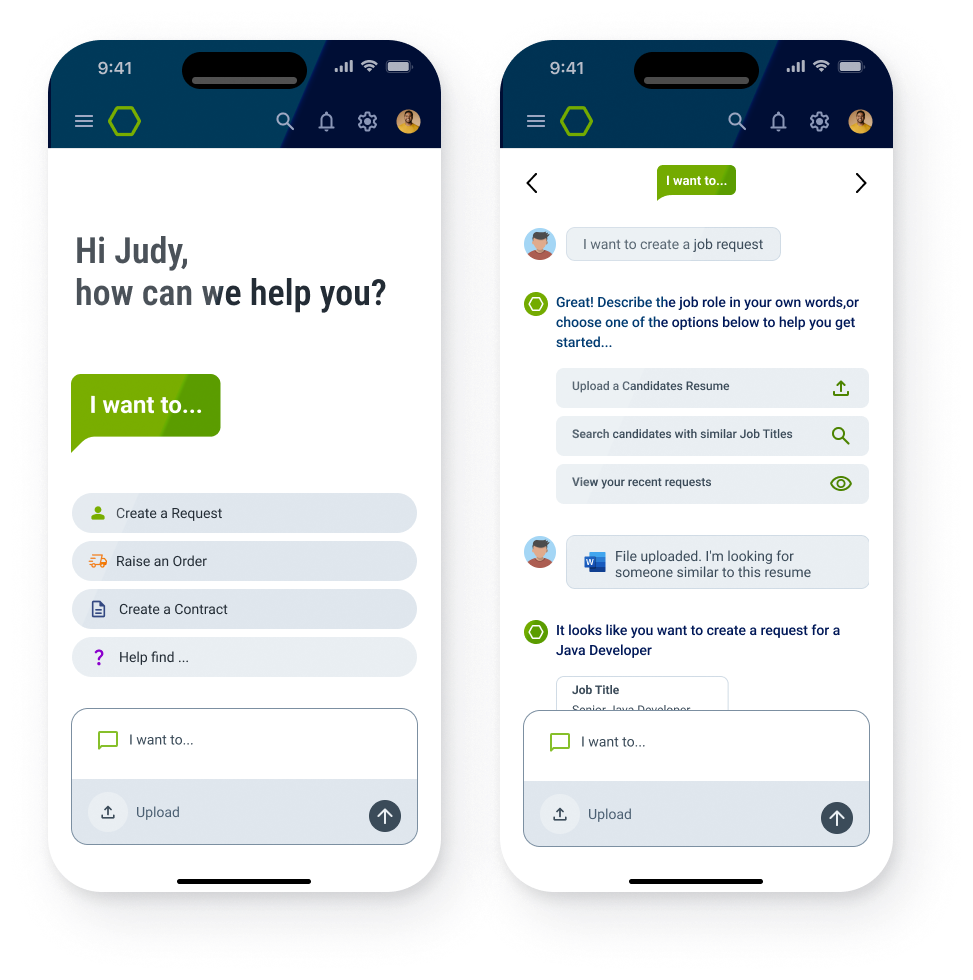
The opportunity was to explore new ways for Hiring Managers and MSPs to initiate talent requests from the environments they already use — whether a client's own system, Microsoft Teams or Slack.
The aim was to make Beeline’s request-creation capabilities more accessible without carrying the limitations of the legacy interface into the new experience.
02 — EXPLORE
Challenging the proposed solution
Questioning whether AI chat was the right experience for a structured task.
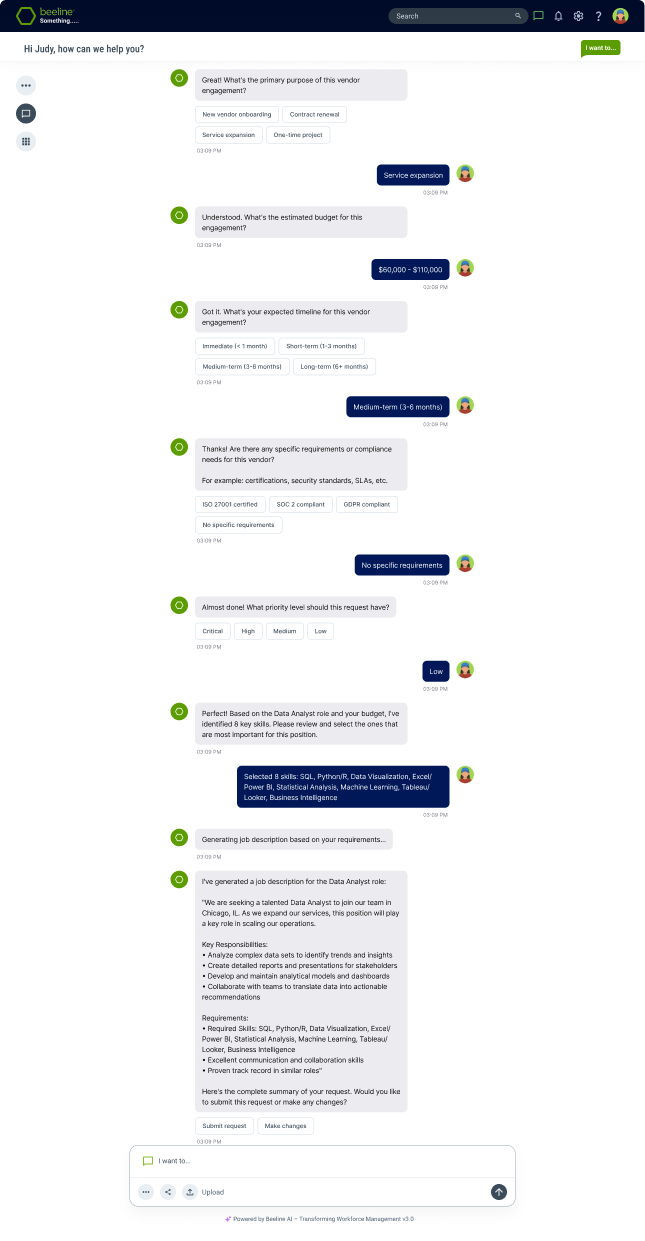
Product’s initial proposal was an AI chat that would ask questions and collect the minimum information needed to create a talent request.
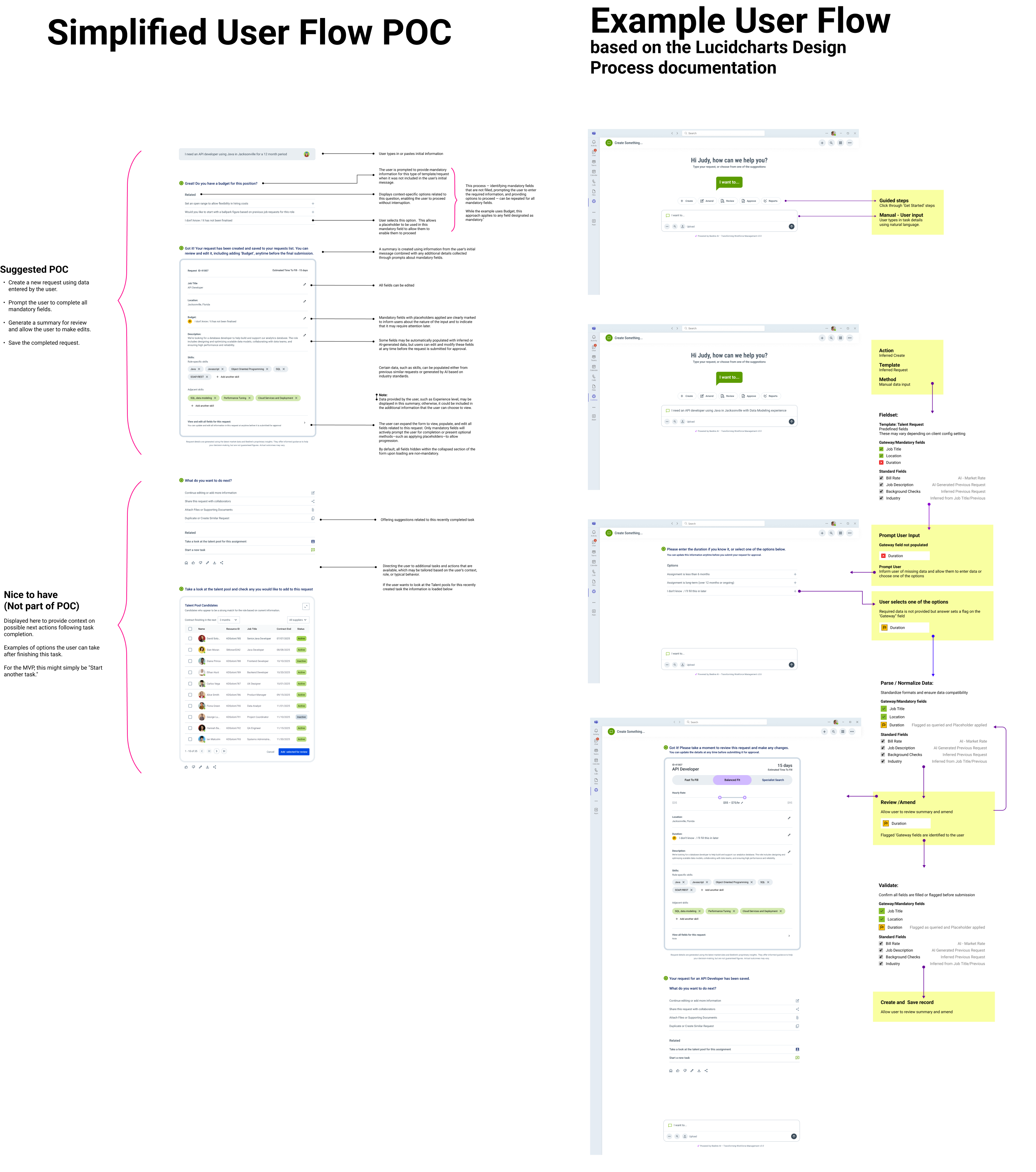
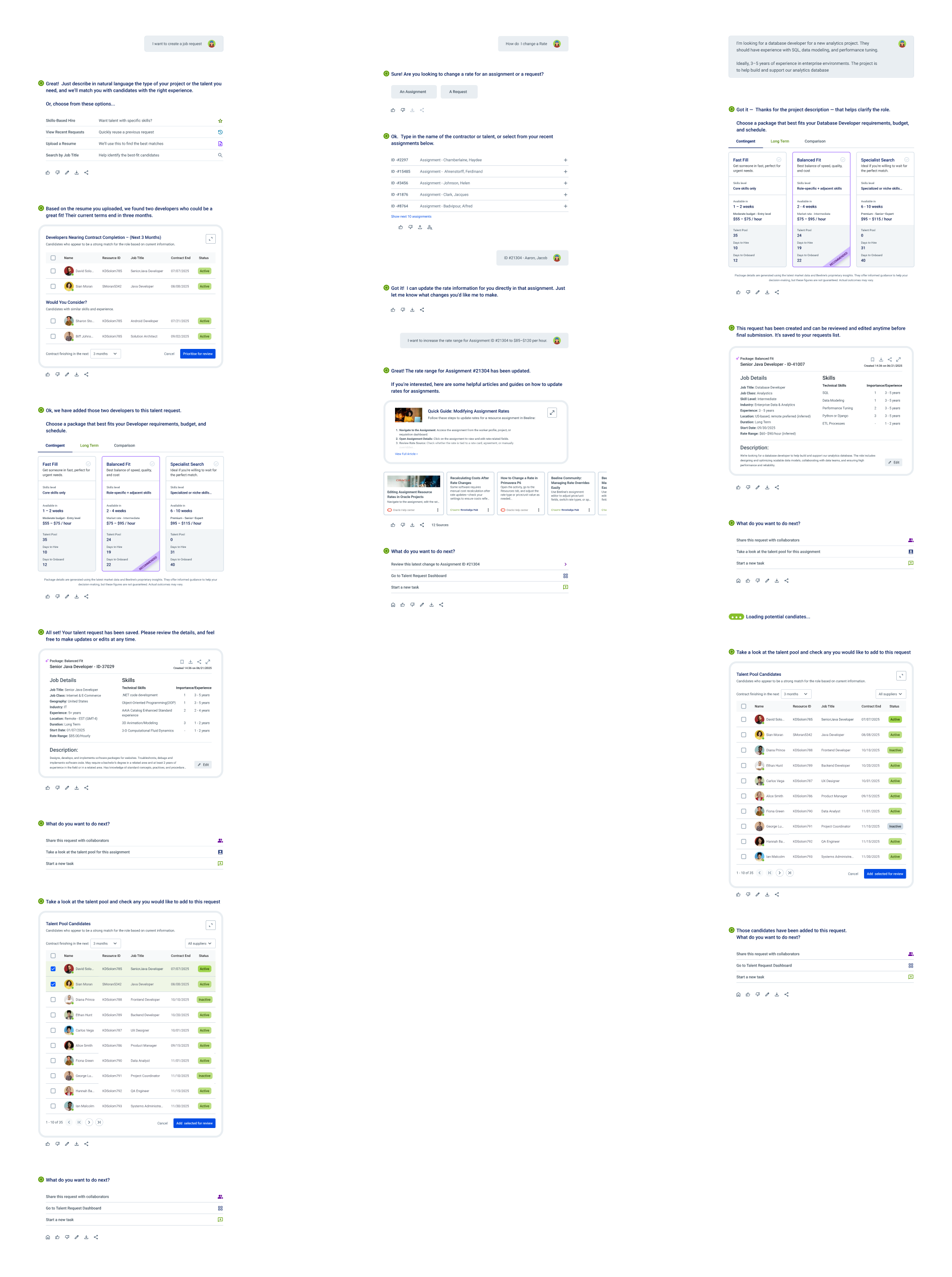
I started mapping the conversation and designing the interface in Figma. Working through the flow led me to question whether open-ended chat was the most intuitive way to complete a task with defined information and rules.
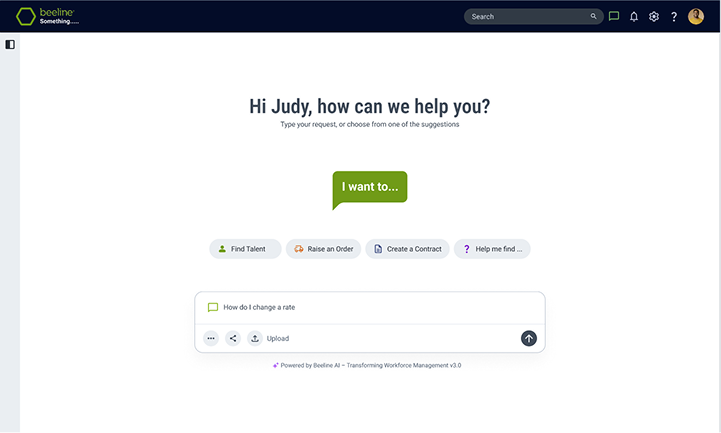
A blank chat screen placed too much responsibility on users to work out what to say and what to do next. The experience needed more guidance, clearer progress and a reliable route to completion.
Rather than treating chat as a given, I explored whether a more structured interaction could better serve the user and the task.
DESIGN PHILOSOPHY
"The best interface isn't always a conversation"
Choosing the interaction that fits the task, not the technology that happens to be available.
03 — TESTING
Finding a better way through
Comparing open-ended chat with a guided, step-by-step workflow.
I prototyped and compared two approaches: conversational AI and a guided workflow, using Figma and AI-assisted prototyping tools.
The guided experience grouped related questions into logical sections and used progressive disclosure to make the task easier to follow. Users could focus on one thing at a time, with clearer expectations about what was needed.
Testing showed that users provided more information through the guided experience. In the open-chat test, one participant typed over 80 characters to explain what they needed — highlighting the effort required when users had to work out what to say for themselves.
The insight wasn’t that chat was always wrong. It was that a structured task needed enough guidance to help people move forward with confidence.
04 — DISCOVERY
Uncovering the underlying data constraint
Looking beyond the interaction to understand what the system would allow.
I investigated how existing validation rules constrained the proposed experience. A request record couldn’t be created or saved as a draft until every mandatory field was completed — including fields configured by each client’s administrator, some of which went beyond basic request details.
I worked with stakeholders to agree a minimum set of required information to create the initial record, allowing the PMO team (Programme Management Office) to complete and validate the remaining details later.
This shifted the challenge beyond simplifying the form: we needed a way to initiate requests with incomplete information without compromising the rules governing the data.
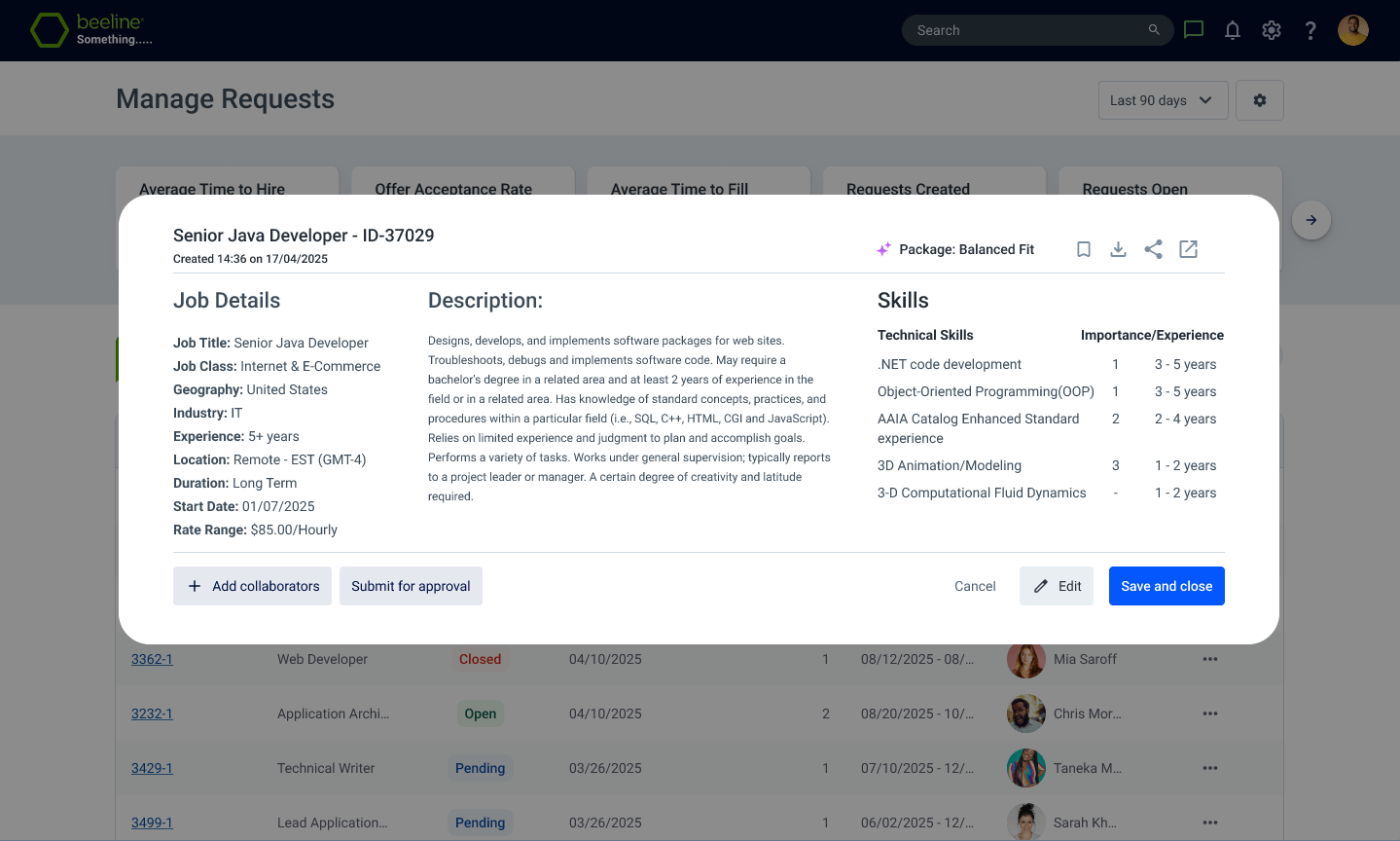
CONVERSATIONAL AI IN CONTEXT
"Progress shouldn't depend on perfection"
Helping users move forward with incomplete information, without compromising data integrity.
DESIGN PHILOSOPHY
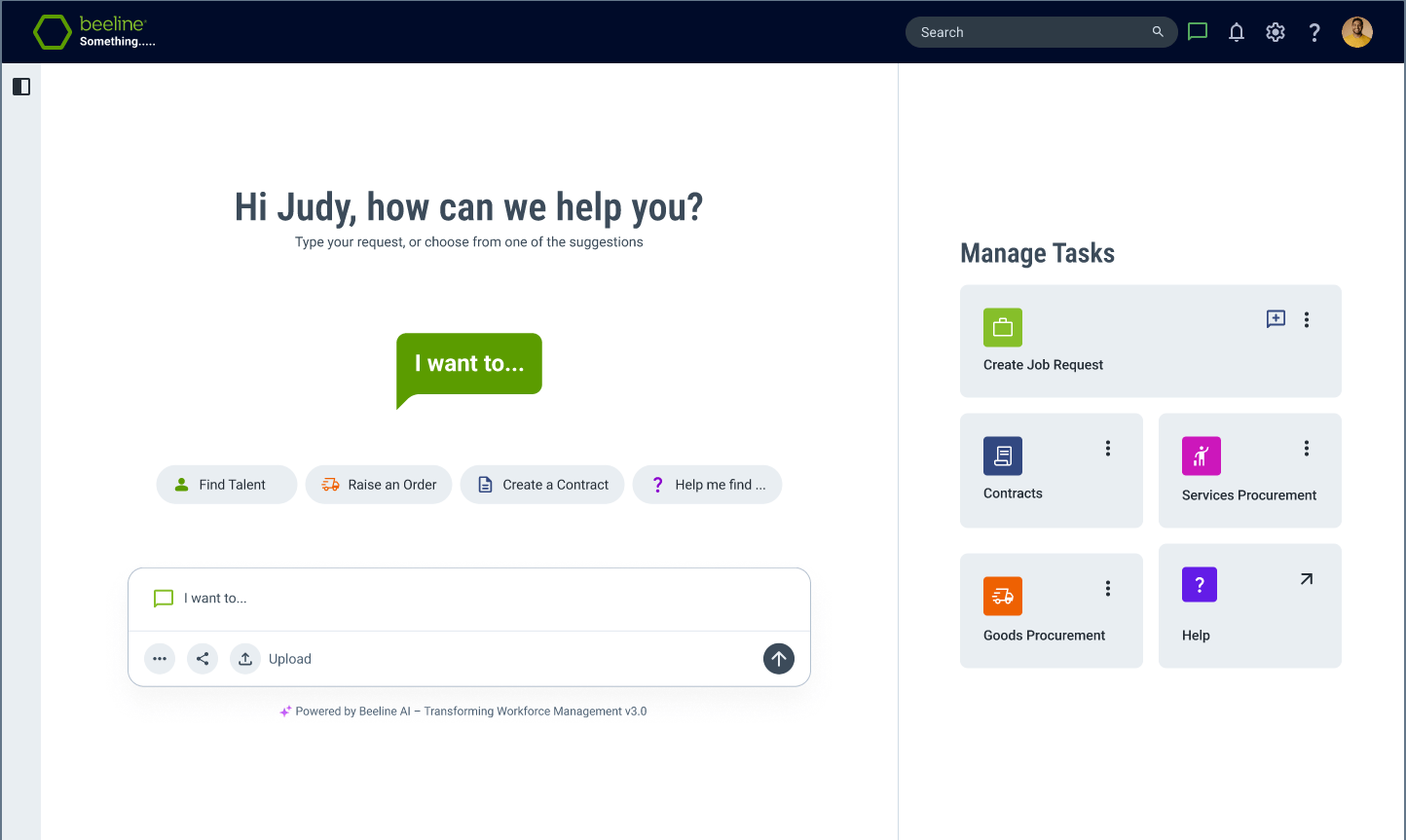
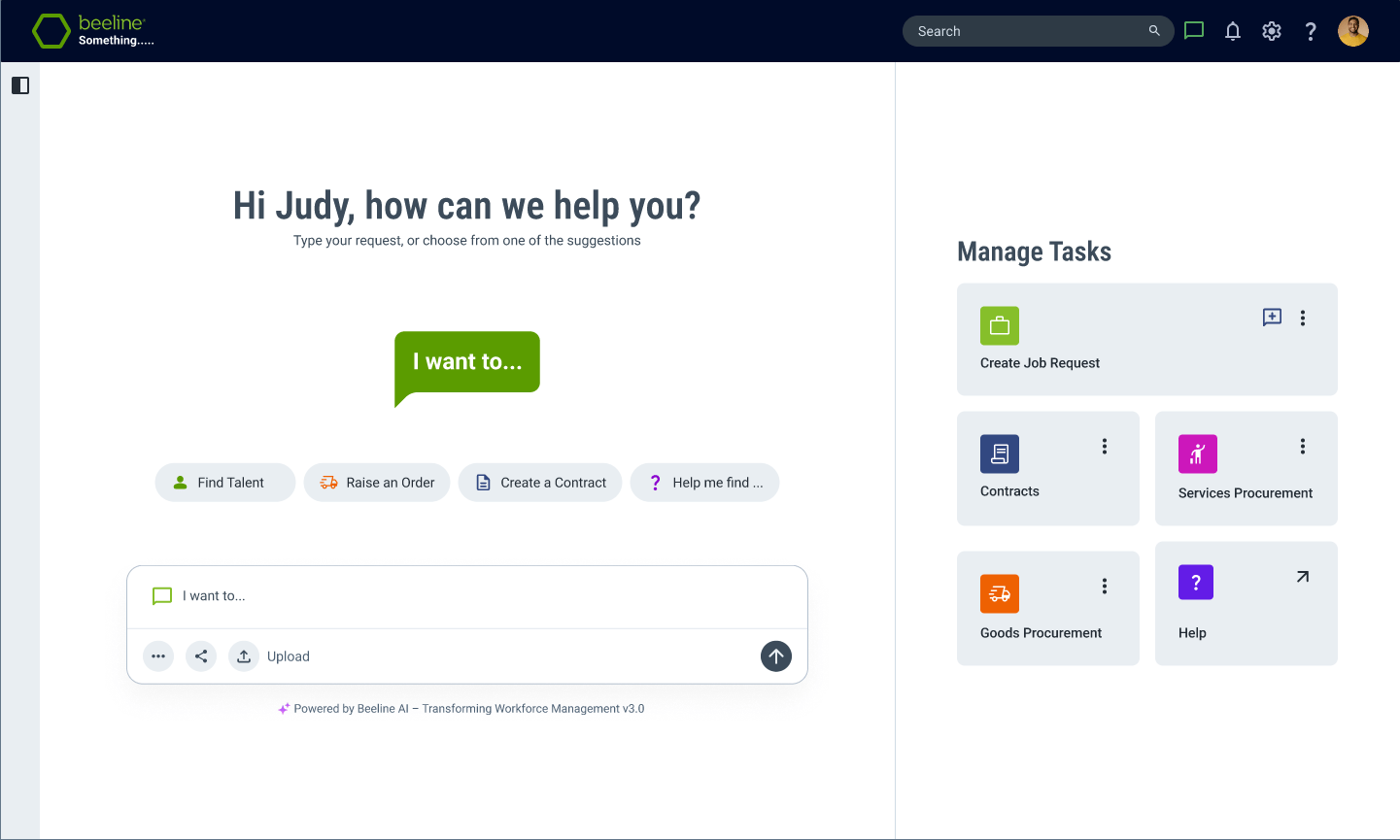
AI-assisted guided form - Progressive Disclosure
05 — SYSTEMS THINKING
From missing data to meaningful information
Exploring ways to resolve incomplete input while respecting business rules.
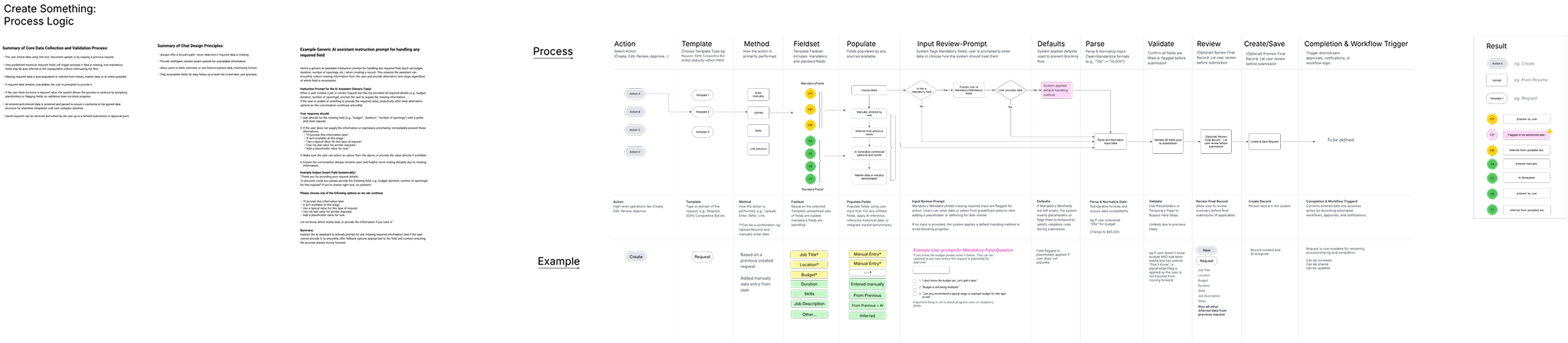
I explored a field-agnostic model for how AI and existing product capabilities could help users provide usable information and address gaps before a request entered the existing workflow.
Help users provide the right information
- Suggest — Offer matching options as users type.
- Translate — Map company-specific terms to recognised equivalents.
- Reuse — Surface relevant existing or historical data.
- Infer — Recommend values based on context.
Handle incomplete information behind the scenes
- Generate — Create content using AI.
- Defer — Flag missing information for later resolution where business rules permit.
- Normalise — Convert data into the required format automatically where the transformation is safe and unambiguous.
The aim was to explore alternatives to simply blocking users when information was incomplete — while preserving data quality and the rules the system depended on.
06 — OUTCOME
From input to insight
Connecting guided interactions, minimum data requirements and data resolution.
What began as an opportunity to rethink request creation revealed a broader challenge: improving the experience meant changing not only how users provided information, but also how the system handled what was missing
A clearer interaction

TESTING showed users consistently provided more information through the guided workflow.
A lower barrier to entry
I secured agreement on a reduced minimum set of mandatory information.
A broader solution space
I developed an exploratory model for handling incomplete data while respecting business rules.
The central insight: A better entry point depends not just on how users provide information, but on how the system handles it.
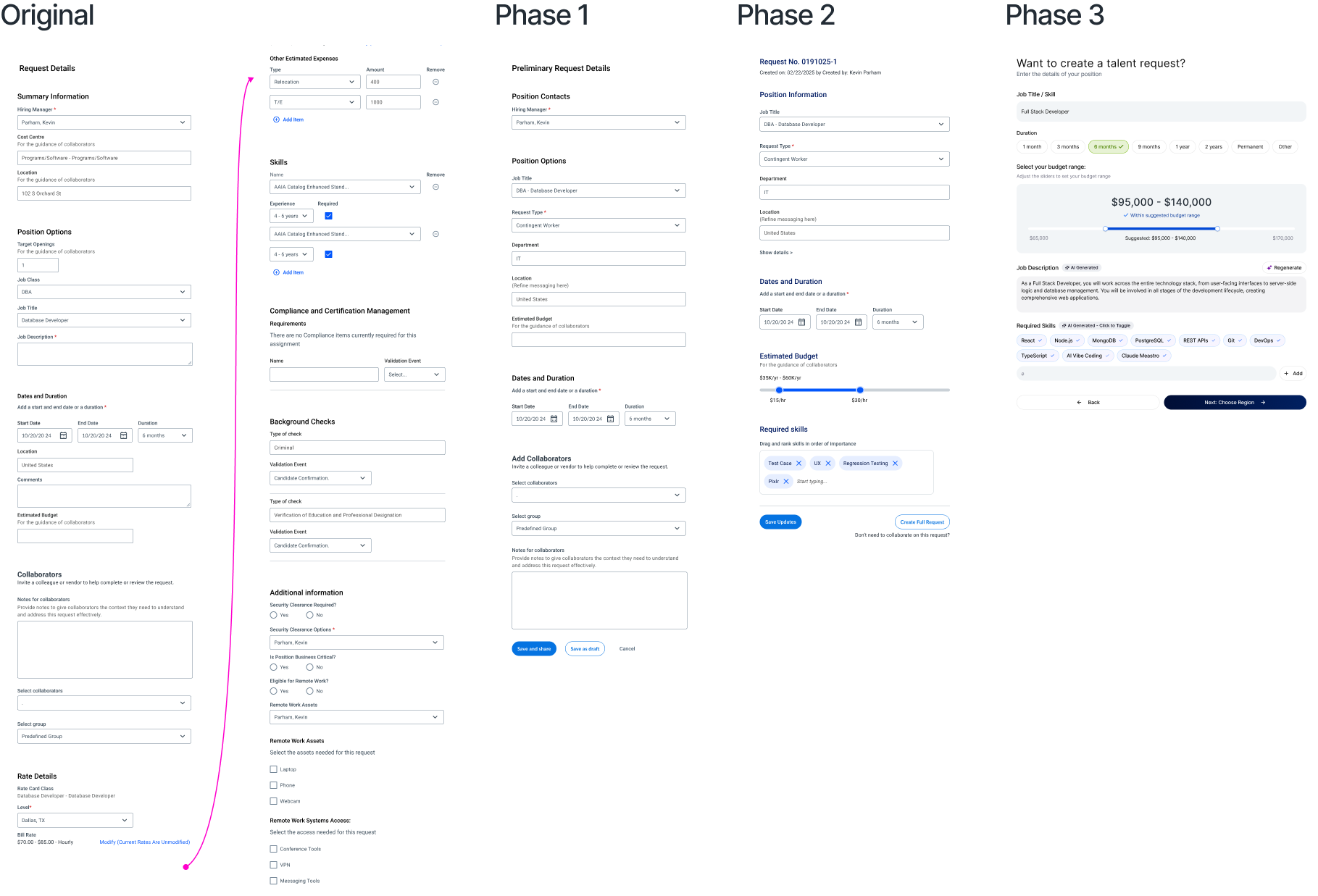
Evolving towards an agreed minimum set of required fields
07 — IMPACT
The impact
Less effort for users. More flexibility in how requests begin.

A more guided experience
Tested an AI-assisted, progressive-disclosure approach that gave users clearer direction than open-ended chat.
14 → 5
Fewer mandatory fields
Secured agreement to reduce the minimum information required to initiate a request.
7
Data-resolution strategies
Four user-facing — Suggest, Translate, Reuse and Infer. Three system-level — Generate, Defer and Normalise.
STRATEGIC INFLUENCE
"Challenge the solution. Find the real problem"
Moving beyond the original brief to uncover the constraints shaping the experience.


Home
Work
About
Contact
Case Study
·
#01
Rethinking talent request creation
A more human-centred approach to AI-assisted workflows
ROLE -
Staff Product Designer
TEAMS -
Product · Engineering · Implementation · Strategy
FOCUS -
AI-assisted workflows · Progressive disclosure · Enterprise data · UX strategy
01 — CONTEXT
Context & opportunity
Exploring how Beeline could meet users where they work.

The existing request-creation journey relied on a monolithic legacy application. Its outdated form was difficult to change, the experience was fragmented, and users couldn’t save their progress as a draft.
The opportunity was to explore new ways for Hiring Managers and MSPs to initiate talent requests from the environments they already use — whether a client's own system, Microsoft Teams or Slack.
The aim was to make Beeline’s request-creation capabilities more accessible without carrying the limitations of the legacy interface into the new experience.
02 — EXPLORE
Challenging the proposed solution
Questioning whether AI chat was the right experience for a structured task.
Product’s initial proposal was an AI chat that would ask questions and collect the minimum information needed to create a talent request.
I started mapping the conversation and designing the interface in Figma. Working through the flow led me to question whether open-ended chat was the most intuitive way to complete a task with defined information and rules.
A blank chat screen placed too much responsibility on users to work out what to say and what to do next. The experience needed more guidance, clearer progress and a reliable route to completion.
Rather than treating chat as a given, I explored whether a more structured interaction could better serve the user and the task.
DESIGN PHILOSOPHY
"The best interface isn't always a conversation"
Choosing the interaction that fits the task, not the technology that happens to be available.
03 — TESTING
Finding a better way through
Comparing open-ended chat with a guided, step-by-step workflow.
I prototyped and compared two approaches: conversational AI and a guided workflow, using Figma and AI-assisted prototyping tools.
The guided experience grouped related questions into logical sections and used progressive disclosure to make the task easier to follow. Users could focus on one thing at a time, with clearer expectations about what was needed.
Testing showed that users provided more information through the guided experience. In the open-chat test, one participant typed over 80 characters to explain what they needed — highlighting the effort required when users had to work out what to say for themselves.
The insight wasn’t that chat was always wrong. It was that a structured task needed enough guidance to help people move forward with confidence.
04 — DISCOVERY
Uncovering the underlying data constraint
Looking beyond the interaction to understand what the system would allow.
I investigated how existing validation rules constrained the proposed experience. A request record couldn’t be created or saved as a draft until every mandatory field was completed — including fields configured by each client’s administrator, some of which went beyond basic request details.
I worked with stakeholders to agree a minimum set of required information to create the initial record, allowing the PMO team (Programme Management Office) to complete and validate the remaining details later.
This shifted the challenge beyond simplifying the form: we needed a way to initiate requests with incomplete information without compromising the rules governing the data.
CONVERSATIONAL AI IN CONTEXT
"Progress shouldn't depend on perfection"
Helping users move forward with incomplete information, without compromising data integrity.
DESIGN PHILOSOPHY
AI-assisted guided form - Progressive Disclosure
05 — SYSTEMS THINKING
From missing data to meaningful information
Exploring ways to resolve incomplete input while respecting business rules.
I explored a field-agnostic model for how AI and existing product capabilities could help users provide usable information and address gaps before a request entered the existing workflow.
Help users provide the right information
- Suggest — Offer matching options as users type.
- Translate — Map company-specific terms to recognised equivalents.
- Reuse — Surface relevant existing or historical data.
- Infer — Recommend values based on context.
Handle incomplete information behind the scenes
- Generate — Create content using AI.
- Defer — Flag missing information for later resolution where business rules permit.
- Normalise — Convert data into the required format automatically where the transformation is safe and unambiguous.
The aim was to explore alternatives to simply blocking users when information was incomplete — while preserving data quality and the rules the system depended on.
06 — OUTCOME
From input to insight
Connecting guided interactions, minimum data requirements and data resolution.
What began as an opportunity to rethink request creation revealed a broader challenge: improving the experience meant changing not only how users provided information, but also how the system handled what was missing
A clearer interaction

TESTING showed users consistently provided more information through the guided workflow.
A lower barrier to entry
I secured agreement on a reduced minimum set of mandatory information.
A broader solution space

I developed an exploratory model for handling incomplete data while respecting business rules.
The central insight: A better entry point depends not just on how users provide information, but on how the system handles it.
Evolving towards an agreed minimum set of required fields
07 — IMPACT
The impact
Less effort for users. More flexibility in how requests begin.
A more guided experience
Tested an AI-assisted, progressive-disclosure approach that gave users clearer direction than open-ended chat.
14 → 5
Fewer mandatory fields
Secured agreement to reduce the minimum information required to initiate a request.
7
Data-resolution strategies
Four user-facing — Suggest, Translate, Reuse and Infer. Three system-level — Generate, Defer and Normalise.
STRATEGIC INFLUENCE
"Challenge the solution. Find the real problem"
Moving beyond the original brief to uncover the constraints shaping the experience.
Home
Work
About
Contact
Case Study
·
#01
Rethinking talent request creation
A more human-centred approach to AI-assisted workflows
ROLE -
Staff Product Designer
TEAMS -
Product · Engineering · Implementation · Strategy
FOCUS -
AI-assisted workflows · Progressive disclosure · Enterprise data · UX strategy
01 — CONTEXT
Context & opportunity
Exploring how Beeline could meet users where they work.

The existing request-creation journey relied on a monolithic legacy application. Its outdated form was difficult to change, the experience was fragmented, and users couldn’t save their progress as a draft.
The opportunity was to explore new ways for Hiring Managers and MSPs to initiate talent requests from the environments they already use — whether a client's own system, Microsoft Teams or Slack.
The aim was to make Beeline’s request-creation capabilities more accessible without carrying the limitations of the legacy interface into the new experience.
02 — EXPLORE
Challenging the proposed solution
Questioning whether AI chat was the right experience for a structured task.
Product’s initial proposal was an AI chat that would ask questions and collect the minimum information needed to create a talent request.
I started mapping the conversation and designing the interface in Figma. Working through the flow led me to question whether open-ended chat was the most intuitive way to complete a task with defined information and rules.
A blank chat screen placed too much responsibility on users to work out what to say and what to do next. The experience needed more guidance, clearer progress and a reliable route to completion.
Rather than treating chat as a given, I explored whether a more structured interaction could better serve the user and the task.
DESIGN PHILOSOPHY
"The best interface isn't always a conversation"
Choosing the interaction that fits the task, not the technology that happens to be available.
03 — TESTING
Finding a better way through
Comparing open-ended chat with a guided, step-by-step workflow.
I prototyped and compared two approaches: conversational AI and a guided workflow, using Figma and AI-assisted prototyping tools.
The guided experience grouped related questions into logical sections and used progressive disclosure to make the task easier to follow. Users could focus on one thing at a time, with clearer expectations about what was needed.
Testing showed that users provided more information through the guided experience. In the open-chat test, one participant typed over 80 characters to explain what they needed — highlighting the effort required when users had to work out what to say for themselves.
The insight wasn’t that chat was always wrong. It was that a structured task needed enough guidance to help people move forward with confidence.
04 — DISCOVERY
Uncovering the underlying data constraint
Looking beyond the interaction to understand what the system would allow.
I investigated how existing validation rules constrained the proposed experience. A request record couldn’t be created or saved as a draft until every mandatory field was completed — including fields configured by each client’s administrator, some of which went beyond basic request details.
I worked with stakeholders to agree a minimum set of required information to create the initial record, allowing the PMO team (Programme Management Office) to complete and validate the remaining details later.
This shifted the challenge beyond simplifying the form: we needed a way to initiate requests with incomplete information without compromising the rules governing the data.
CONVERSATIONAL AI IN CONTEXT
"Progress shouldn't depend on perfection"
Helping users move forward with incomplete information, without compromising data integrity.
DESIGN PHILOSOPHY
AI-assisted guided form - Progressive Disclosure
05 — SYSTEMS THINKING
From missing data to meaningful information
Exploring ways to resolve incomplete input while respecting business rules.
I explored a field-agnostic model for how AI and existing product capabilities could help users provide usable information and address gaps before a request entered the existing workflow.
Help users provide the right information
- Suggest — Offer matching options as users type.
- Translate — Map company-specific terms to recognised equivalents.
- Reuse — Surface relevant existing or historical data.
- Infer — Recommend values based on context.
Handle incomplete information behind the scenes
- Generate — Create content using AI.
- Defer — Flag missing information for later resolution where business rules permit.
- Normalise — Convert data into the required format automatically where the transformation is safe and unambiguous.
The aim was to explore alternatives to simply blocking users when information was incomplete — while preserving data quality and the rules the system depended on.
06 — OUTCOME
From input to insight
Connecting guided interactions, minimum data requirements and data resolution.
What began as an opportunity to rethink request creation revealed a broader challenge: improving the experience meant changing not only how users provided information, but also how the system handled what was missing
A clearer interaction

TESTING showed users consistently provided more information through the guided workflow.
A lower barrier to entry
I secured agreement on a reduced minimum set of mandatory information.
A broader solution space
I developed an exploratory model for handling incomplete data while respecting business rules.
The central insight: A better entry point depends not just on how users provide information, but on how the system handles it.
Evolving towards an agreed minimum set of required fields
07 — IMPACT
The impact
Less effort for users. More flexibility in how requests begin.
A more guided experience
Tested an AI-assisted, progressive-disclosure approach that gave users clearer direction than open-ended chat.
14 → 5
Fewer mandatory fields
Secured agreement to reduce the minimum information required to initiate a request.
7
Data-resolution strategies
Four user-facing — Suggest, Translate, Reuse and Infer. Three system-level — Generate, Defer and Normalise.
STRATEGIC INFLUENCE
"Challenge the solution. Find the real problem"
Moving beyond the original brief to uncover the constraints shaping the experience.